Zoe Bellatorre joins Dr. Sandie Morgan as they reveal why the most common form of child trafficking never makes the missing persons list — and why the quiet, compliant child sitting in the back of the classroom may be the one hiding the most.
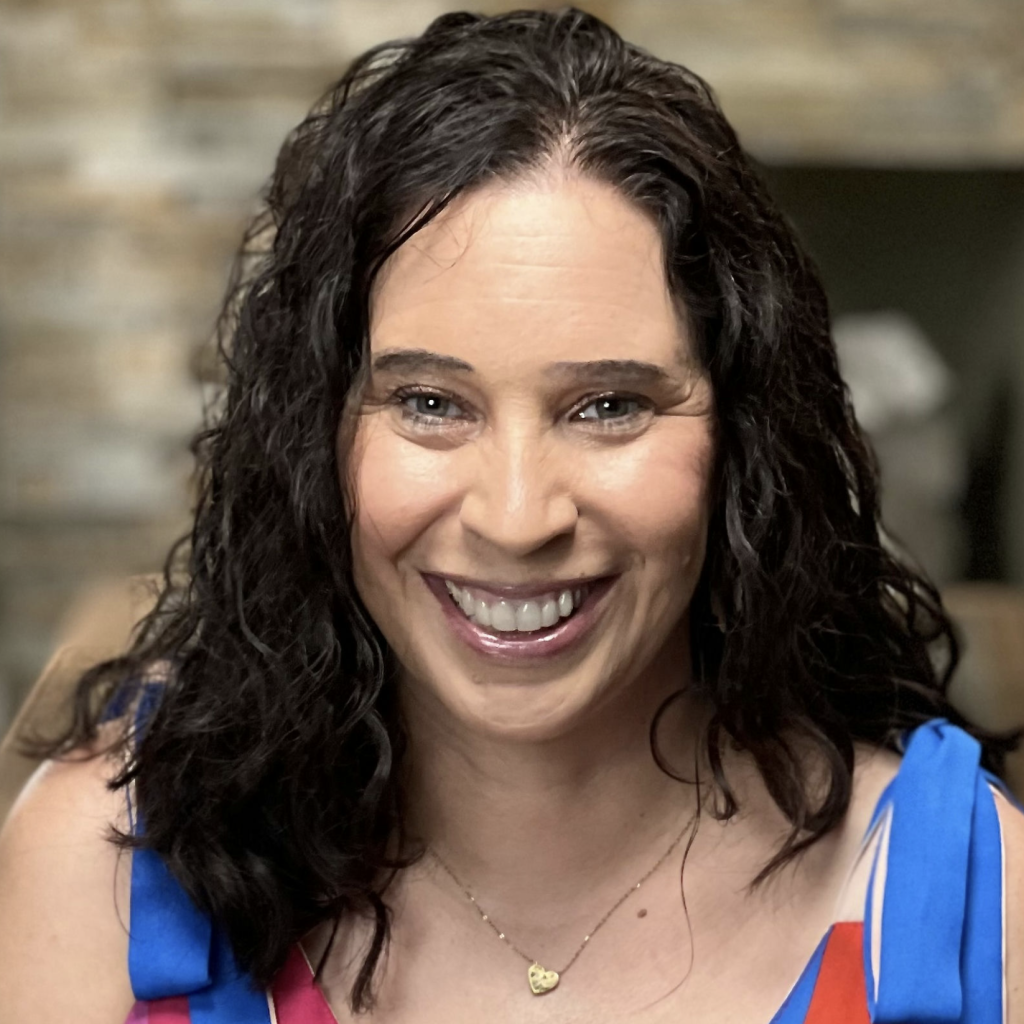
Zoe Bellatorre
Zoe Bellatorre is a survivor advocate, trainer, and speaker with over a decade of experience in the anti-trafficking field, specializing in familial trafficking. She holds a Master’s in Intercultural Studies with Children at Risk from Fuller Theological Seminary and a Bachelor of Science in Education from Ashland University. Zoe has served as Coordinator of Outreach with The Avery Center and as a Survivor Advocate with CAST LA and Dignity Health, providing crisis intervention within healthcare systems. A recognized subject matter expert, she has consulted with the Office for Victims of Crime Human Trafficking Collective, the National Human Trafficking Training and Technical Assistance Center (NHTTAC), and the U.S. State Department. Her published contributions include essays in the 2021 and 2023 Trafficking in Persons Reports, the 2024 co-authored work on child trafficking misconceptions, and the anthology Medical Perspectives on Human Trafficking in Adolescents. She serves on the advisory council for the Polaris Project’s Resilience Fund and on the board of Ride My Road.
Key Points
- Familial trafficking — in which a family member or caregiver is the trafficker or sells the child to a third party — accounts for 60% of child trafficking cases, making it the most common form of exploitation, yet it remains the most overlooked.
- Unlike pimp-controlled trafficking, children trafficked by family rarely go missing; they may attend school daily, making the conventional “missing child” framework nearly useless for identifying them.
- The average age of entry into familial trafficking is four years old — years before most prevention education ever reaches a child — which means abuse becomes normalized long before anyone thinks to intervene.
- Indicators for familial trafficking look very different from other forms: rather than acting out, these children tend to be unusually quiet, compliant, and eager to please adults, driven by fear of any attention being drawn back to the home.
- Children in familial trafficking rarely disclose, and when they do, they are often not believed — after one or two failed attempts, most simply stop trying, leaving them isolated with the false belief that no one else experiences what they are living through.
- 35% of familial trafficking cases are generational, meaning the cycle has repeated across mothers, grandmothers, and siblings — making family members who witnessed it less likely to intervene and more likely to look the other way.
- The “stranger danger” framework has been one of the most damaging concepts in child protection, because it trains communities to look outward for threats while the exploitation happening inside trusted homes, families, and institutions goes unseen.
- Research shows that a single trusted adult in a child’s life significantly increases the likelihood of earlier disclosure or prevention altogether — meaning every person in a community has a concrete role to play, regardless of their profession.
Resources
- Ending Human Trafficking Podcast
- EHT Episode 278 – Identifying and Interacting with Minor Victims of Human Trafficking, with Dr. Jodi Quas
- EHT Episode 353 – Grooming in Trusted Spaces: A Conversation with Dr. Beth Lorance
- Trafficking in Persons Report – U.S. Department of State
- Medical Perspectives on Human Trafficking in Adolescents: A Case-Based Guide
Transcript
[00:00:00] Zoe Bellatorre: This emphasis on stranger danger is probably one of the biggest harms to child safety and child protection that we ever had.
[00:00:14] Delaney: The most common form of child trafficking doesn’t happen on the streets. It happens in the home, and most of us are trained to miss it. In this episode, Zoe Bellatorre explains why kids trafficked by family often don’t run away or even get reported missing. They may still show up to school every day, quiet, compliant, and trying not to draw attention. Today you’ll hear what signs to look out for, why disclosure is so complicated, and how teachers, nurses, and neighbors can widen their lens and recognize what’s been hiding in plain sight. Hi, I’m Delaney. I’m a student here at Vanguard University and I help produce this show. Today, Sandie talks with Zoe Bellatorre, a survivor advocate and trainer who has consulted on the Trafficking in Persons Report and specializes in family trafficking. And now here’s their conversation.
[00:01:07] Sandie Morgan: Zoe Bellatorre, I am so glad to have you with us today.
[00:01:12] Zoe Bellatorre: Thank you for having me. It’s an honor to be here.
[00:01:15] Sandie Morgan: You are such an accomplished survivor advocate, lived experience expert, and university graduate. I’ve been impressed with your advocacy since I first heard you speak because it’s rooted in professional expertise and lived experience. It’s the whole package. So what first inspired you to begin transforming your story into a platform for education and change?
[00:01:57] Zoe Bellatorre: I don’t know that I ever wanted a platform, per se. I just wanted other people to be helped that were in the situation that I was in, and I wanted to do it in the best way. I didn’t really know how to do it, and so I just kind of put one foot in front of the other. Nathan always says the Christian life is right foot, left foot, right foot, left foot, and that’s what I did. I just found the next faithful step, the next step to do. I didn’t have a ten-year plan or a five-year plan or anything like that. And then I came to realize there were a lot of other survivors out there that just wanted to help those who were being trafficked, but also to contribute to the field.
[00:02:53] Sandie Morgan: And you have done that in such a wonderful way. When I went to your workshop a few months ago in Sacramento for the Prevention Addressing Child Trafficking Conference, I, as a professor, get really excited when I see citations. Your slides were all so well cited. And if you’re a listener and you’re new to this conversation around familial trafficking, I encourage you to follow Zoe because her lived experience combined with her excellence in studying the issues — which is a big thing about the Ending Human Trafficking podcast, we want people to study the issues so they can be a voice and make a difference and say things that are very well grounded. So when you began sharing your expertise, I think it has already begun to shift the way systems understand and respond to trafficking. You’ve been a consultant on the Trafficking in Persons Report. Correct?
[00:04:15] Zoe Bellatorre: I have. I’ve met people in so many other countries that have contributed to the Trafficking in Persons Report. I think the last one had more than 140 countries participate. So your impact, your influence is shaping how other people see this. So what I want to talk about is how your lived experience and the understanding of familial trafficking intersect, and what our listeners need to know.
[00:04:52] Sandie Morgan: So let’s start with a definition of familial trafficking.
[00:04:57] Zoe Bellatorre: Yeah, so familial trafficking is a typology within human trafficking. It occurs whenever a family member or caregiver is the person’s trafficker, or the one that sells — often the child — to a third-party trafficker. Generally with familial trafficking, we’re talking about children. Being the caregiver could mean a grandparent caring for the child, or if they’re in the foster care system, it can be a foster parent. That’s the basics of what it is, and it still has to fall within the definition of human trafficking. Something of value has to be exchanged. There’s a third party involved. But that’s basically it.
[00:05:44] Sandie Morgan: Okay. And you kept that so crystal clear. I appreciate that, because what I’ve experienced is that familial trafficking is often misunderstood and overlooked even among professionals in our field. So from your perspective, what are some of the unique challenges that we have to overcome?
[00:06:09] Zoe Bellatorre: Well, I think the first challenge is just educating professionals. Educating law enforcement, educating Department of Children and Family Services, educating even other people who work in the anti-trafficking field. If you’re somebody who works in the anti-trafficking field and you are in a position of power, you need to look for who’s missing at the table. Is there someone representative of familial trafficking? Because familial trafficking can include both sex and labor exploitation. So is there representation from familial sex trafficking, representation from familial labor trafficking? I think that’s the first step. And then also adjusting our policies and procedures to be inclusive of familial trafficking. If we provide forensic interviewing with a child that’s weeks long and they’re still in that home, that is problematic for that child. They will either be harmed further or they will change what they’re saying because they’ve been threatened. And I would also say another challenge is that these children don’t go missing. So if all of our protocols are about missing children — who are either runaway or reported to NCMEC because they’re missing for whatever reason — the majority of children who are trafficked by family never go missing. It’s happening within the home. I think a big barrier to identification and understanding is that we don’t want to believe that our neighbor is hurting their child. And we have — we don’t have a collective culture here. In the US we have more of an individualistic culture. So it’s like when you go into your home and close your door, what you do behind that door —
[00:08:16] Sandie Morgan: That’s your business. It’s not my business. But it needs to be our business to care for vulnerable kids in our community. If they are showing indications of being trafficked by their family, that needs to be our business. So that’s another thing I would say. And another area is making sure teachers are trained, because kids are with their teacher for six hours a day. And if the teacher isn’t trained and they’re just overlooking this child — okay, let’s talk about that a little more. I totally agree with you. With the survivors I’ve worked with who were trafficked by a family member, what you pointed out in your teaching was that the signs we are taught — so teachers have had some training — but they’re looking for signs like absenteeism, running away, some of those other things. And the signs for familial trafficking may be very different.
[00:09:41] Zoe Bellatorre: Yeah. There are so many different ways a kid can be trafficked by their family. I would say some of the indicators are more along the lines of the child having bruising that they’re covering up. Or maybe they are very compliant. They’re shut down, they’re sleeping in class. They’re the quiet kid. The kid just doesn’t ever cause waves or disruption. They’re not going to be the child that’s acting out, most likely — though that can happen. Maybe you see increased indication or behaviors around the weekends or around holiday breaks, or the kid just doesn’t seem like themselves. They don’t have any sense of danger or boundaries. Or they either have huge educational gaps, or they’re always trying to be the A student and please the teacher because they don’t want any adult to get upset — and especially no call to go home to family members. Those are just a few of the indicators. Almost always it starts with some form of abuse, but that abuse often begins much younger than school age. The average age of entry into familial trafficking is four years old — so that’s even before the child starts school. Of course there are kids where it starts later and kids where it starts younger, because that’s how averages work.
[00:11:36] Sandie Morgan: Yeah, that’s right. I’m thinking in reverse — engineering with familial trafficking survivors that I’ve worked with — and one of the things that is consistent is that they were not — they felt like they were trained not to attract attention. And so that meant they did go to school every day, even if they fell asleep in class, because truancy would lead to a visit to the home. So the student is going to get in trouble at home if they cause any attention. And this is something even as they get older. I remember one survivor who was very concerned because someone she had shared her story with secretly reached out and law enforcement showed up at her home. And this little girl was petrified because she had told the secret, and now the family was looking at her to blame for the attention it drew. I don’t think that when we’re training teachers and other community leaders, we’re including things like that.
[00:13:11] Zoe Bellatorre: Yeah.
[00:13:12] Sandie Morgan: So another issue is disclosure. Dr. Jody Kwa was on the podcast after she did some research that showed that when kids are victims of child sexual abuse — which is different than familial trafficking; they’re not being sold and exploited, but they are being abused — in familial trafficking, the kids did not disclose. But in child sexual abuse, once you went through pretty rigorous training in forensic interviewing, you could build rapport and the child would disclose. So in your lived experience, how does that sound to you? Does that sound logical?
[00:14:09] Zoe Bellatorre: Yeah. Most survivors of familial trafficking that I know of did not disclose, or they were not believed when they did disclose, because they were young and what they said seemed like something that had to be made up because it was so horrific. The professionals didn’t believe them. And so a child tries once, maybe twice to disclose something like this. And when they’re not believed by the adult they’re telling, they just stop telling. They just stop. They think their life is horrible, and there’s a lot of isolation that goes along with familial trafficking. They think they’re the only one this is happening to, even though it’s the most common way that people are exploited.
[00:15:09] Sandie Morgan: Give us some examples of statistics that you’ve uncovered.
[00:15:14] Zoe Bellatorre: 60% of child trafficking cases are familial trafficking — so that may be the person’s only trafficker, or their first trafficker. Maybe they find a way to escape that situation and get away. Then they might meet a different trafficker, somebody they think is nice and kind or is helpful to them, and then they end up being trafficked again. So service providers need to dig beneath the surface to see what home was like, what family was like, rather than just the surface presentation — to get to the core of the issue. The average age of entry into familial trafficking is four years old, as opposed to pimp-controlled trafficking, which is around fifteen or sixteen — anywhere from twelve to sixteen, numbers vary by state. And most survivors of familial trafficking are never identified. They often somehow get away eventually, and there’s no sense of justice — no justice for most survivors of familial trafficking. And in a recent study we did, the traffickers and the buyers come from every demographic — from law enforcement to officials, to pastors, to businessmen. They tend to have a personality that is charming and accepted in the community, well known. So it’s not the weird house on the corner that everyone stays away from. It’s the guy that everyone knows and loves, who has a business or is a well-known official in the community. It can be anybody.
[00:17:25] Sandie Morgan: It’s really hidden.
[00:17:27] Zoe Bellatorre: Hidden exploitation. And because we’ve addressed what we can see — and I think it’s a lot easier for people to deal with pimp-controlled trafficking because it involves an outside person that we can say is the bad one, or that young person shouldn’t have gone here, or responded to that direct message online or whatever — it kind of becomes, in a way, victim blaming that we end up doing to the survivor, even in pimp-controlled trafficking. And I’ll also bring up that 35% of survivors of familial trafficking, it’s generational. This is what happened to mom, this is what happened to grandma, this is what happens to all the kids in our family. And because of that, if an aunt or grandma saw indications of this happening, they sometimes just look the other way. It’s like, well, that happened to me, now it’s your turn. This is just what happens if you’re part of this family. And until someone breaks the cycle and says, it ends with me — no more, this is not acceptable, I will not keep living in this and I will not let a child of mine live through this — so many survivors are cycle breakers. They have broken the cycle of violence.
[00:19:03] Sandie Morgan: I love that — survivors are cycle breakers. That’s awesome. So when you’re comparing familial trafficking to pimp-controlled trafficking, that makes a lot of sense to me. And I think in our training at every level, we need to compare and contrast the two. Because my experience working with older teens and some of our Survivor Gap scholarship students — they were recovered from a pimp-controlled environment. So they had left their familial trafficking, they had escaped, they had somehow been removed from that. So we’re not doing a good job going back and figuring out where this started.
[00:20:02] Zoe Bellatorre: Yeah.
[00:20:02] Sandie Morgan: So what should we be doing about that?
[00:20:06] Zoe Bellatorre: I am a proponent of advocating that we should have this education in schools — and we do have a law in California that we’re supposed to have this education in schools, but it’s oftentimes not comprehensive and it doesn’t start young enough. And I know people are very concerned about talking to kindergartners about sex trafficking, but it has to be age appropriate and developmentally appropriate. You would do things around: we don’t keep secrets, boundaries, what should an adult do and what shouldn’t an adult do? If somebody had come into a classroom and explained that that shouldn’t have been happening to me, I could potentially have been identified much younger. Because it becomes normal for that child — if it starts at two or three years old, this is just what happens. Some families have big Sunday dinners and sit around the table and everybody’s loud, and some families — this is what happens. Obviously I’m making light of it in a way, but it’s just become normal for that child’s eyes. By the time we’re doing this education in middle school or high school, we’re missing years and years of these children’s lives. And too, if you’re only talking about another person coming and doing X, Y, and Z to you, you’re missing this whole population. As a field, we have missed this population. Any agency that says we identify child trafficking, we help with child trafficking — if you are not having specific policies, procedures, and protocols to identify and respond to familial trafficking, you are missing over half the survivors that are out there. They just slip between the cracks.
[00:22:35] Sandie Morgan: And this is making me think back to how we’ve addressed child sexual abuse in a family situation. We taught stranger danger instead of looking right where the child is. We had Dr. Beth Lorance, the family violence professor here at Vanguard University, and she talked about tricky people in the family — adults that aren’t acting in trusting ways. And this was the thing that really settled with me: we are still talking about stranger danger when we’re doing prevention with kids for human trafficking. Yes, we know human trafficking is happening. Yes, we know kids are being sold. In Orange County, our latest report showed that there are more kids than ever. So we need to do a better job and move away from stranger danger, because even in international trafficking, we see that victims — foreign nationals — were trafficked by someone from their own community, not by people from a different race or different nationality. So when you are working with healthcare systems, federal consulting, all of that, how do you communicate the kinds of changes in our training that we need to make?
[00:24:23] Zoe Bellatorre: Well, while kidnapping does happen and stranger abduction does happen, it’s less than 1% of all human trafficking cases. And I will also say that this emphasis on stranger danger is probably one of the biggest harms to child safety and child protection that we ever had, because we stopped looking at — I don’t know if there was a time when we were looking — but apart from the creepy guy at the park, that kid should still know not to talk to strangers. But in most cases of trafficking — labor trafficking, sex trafficking — the victim or survivor knew their trafficker. Whether they thought it was their boyfriend, an employer, whatever. And especially in cases of familial trafficking. So I think we just have to start educating people on healthy relationships and healthy families and those things. Looking at a macro lens — are there social safety nets for people, for afterschool care, for food, for healthcare, for those things? When talking to healthcare, we look at it through a lens of abuse, neglect, and violence. Does this person have a controlling family member or friend with them that they’re looking to for answers, or they won’t speak if that person’s in the room? Or do they physically seem shaken — are they getting sick when that person comes in the room? Those are some indicators. If their complaint and their presentation in a healthcare setting don’t align — similar to a kid who says “I fell off my bike” and has a spiral fracture on his arm — it’s just widening the net. And for healthcare, it’s also thinking — you have to throw out of your brain anything you think you’ve seen in a movie or any perceived notions of who the abuser is, who the offender is. It’s not going to be some guy who looks scary. With familial trafficking, research says that 60% of the time it’s the mother. So it can be a female that’s doing this. Have policies in your healthcare facility that you take the patient back alone — unless they’re a vulnerable child or a vulnerable adult — and then after you stabilize them, the family can come back. If you have a policy, then you’re not singling that person out.
[00:27:54] Sandie Morgan: I like that. Okay, so we’re going to have to have more conversations. And we need to think through how to begin — not to distract from existing policies, because we do need to find kids who are in pimp-controlled circumstances, we need to identify kids who are being controlled online and through sextortion and those things — but it’s not a question of either/or.
[00:28:27] It’s “yes, and.” Your slide in the workshop I attended put signs of one kind of trafficking on one side of the slide and familial trafficking on the other, and that changed my mindset about all the things I need to be filtering — as a nurse, as a pediatric nurse — how can I add to my understanding and widen the field so that I have a better chance of identifying victims? Okay, so let’s talk about the future. What is your hope for changing the landscape in addressing familial trafficking?
[00:29:23] Zoe Bellatorre: Well, the goal obviously would be that this would be unacceptable and we would come to an end. Although I’m a person who’s more realistic — we’re not just going to end it that easily. I think one really important thing is that, specifically with familial sex trafficking or any kind of sex trafficking, we have to address demand. Because you have all these kids that were sold for sex as children — there’s no misunderstanding of “I thought they were 25” or anything like that. They are children. And there are rings of people that do this, and they’re obviously not out on the main street where you’d see people coming and going. It’s very hidden. So I think one thing is just making it culturally unacceptable to buy anybody for any reason. But specifically, if we’re going to be a society that is worth anything, we have to protect children — the most vulnerable among us, those who have disabilities, those who are children, those who cannot defend themselves. That’s the low bar in my mind. We don’t make it acceptable. If you hear your friend joking about buying sex somewhere, you should call them out on it. You should say, “Hey, that’s not okay. The people being harmed here are real.” And then I think the social safety nets. The majority of people — I always say — don’t just wake up one day and think “I’m going to sell my kid because I need rent money.” But there are those whose child was trafficked because they didn’t have any way to get income. So provide those social safety nets for people. And educate children. And educate professionals so they can provide that education, whether it’s in an emergency room setting — communicating that this doesn’t have to happen, there is help out there for you. And there needs to be specific, specialized protocol for familial trafficking cases, for any form of abuse, neglect, or violence with any child. And having specific protocols for these children and having programs that address and service them. Even if you have all those things in place, and then you place this child in a youth home or a safe home or a program to receive case management, and everybody else is not like them and says, “You’re the weirdo — who does that, whose father does that?” — they are going to stop coming, stop showing up, stop talking, and think they were the one who did something wrong. So I think there’s a lot of things we can do. And going back to your comment about inclusion — we have to not have a scarcity mindset in the anti-trafficking field. It has to be more of a mindset of building a bigger table. Looking around when you’re at a court, when you’re at a task force meeting, and saying, who’s missing? Who’s missing here that we could invite? It doesn’t take away from your role or your place at the table. It just means pulling an extra chair up and giving that person a voice to say, “Hey, if this would’ve happened, that would’ve kept me safe.” Because there’s a lot to say — it’s not just identification and understanding. It’s working with survivors who were trafficked throughout their childhood and now have long-term health consequences, who need a scholarship to go to school or need to take their GED because they were forced to drop out. Any number of other things. So it’s the long-term care and support. And for those who are listening from a faith background — we have a call to love those who are orphaned or who do not have contact with their family. It’s our responsibility as people who love Jesus to welcome those in, to have that extra literal seat at the table, to make sure our programs and talks and everything aren’t only directed to people from two-parent families — to understand that this happens to people on a regular basis. Until we do that, there’s a lot to do. We’re just starting to address this, and it’s been going on since the beginning of time.
[00:34:55] Sandie Morgan: I have so many positive responses to what you’re saying — positive in that I agree we need to be better advocates in this space. And you mentioned the faith community, churches. Some research has shown that familial trafficking is more hidden in communities with lots of control, so we want to engage not just social workers and teachers, but we do want faith leaders to know what to look for. Zoe, I have so much more I want to talk to you about, and I’m sure we’re going to do another episode. But for today, can you just give us one last statement for what you’d like people to do so that they can be better partners with you in your mission to end family trafficking?
[00:36:05] Zoe Bellatorre: Research indicates that if a child had one safe person in their life — just one — they would either have been able to disclose earlier, or they wouldn’t have been trafficked at all. So be that person. Be the home that all the kids in the neighborhood come over to. Be the parent that’s always at your kids’ band competitions, handing out snacks at the soccer field, or wherever. We may not all be able to change the world, but we can change where we’re at — our communities, our cities, our neighborhoods. Regardless of whether you’re in Southern California or across the world, you can try to change the world for the better and be that positive person. Even years later, look for the person who’s sitting alone or doesn’t have anybody or doesn’t have family, and invite them to be with you, to have a conversation, to have coffee, whatever it is.
[00:37:20] Sandie Morgan: Because we have macro policies we want to instill, but there’s also the very micro — do you know your neighbors? Do you care for your neighbors? That is a great call to action: be the one trusted adult. So thank you so much, Zoe. I look forward to future conversations.
[00:37:46] Zoe Bellatorre: Thank you.
[00:37:48] Delaney: Thank you to Zoe Bellatorre for naming what so often goes unrecognized — that many children trafficked by family members never go missing, and that the quiet, compliant child may be one who’s been trained not to draw attention. Listeners, if you love this conversation, make sure to check out our website at endinghumantrafficking.org for tons of in-depth show notes and other resources. If you’d love to help us grow this podcast, you can start by sharing this episode with someone and connecting with us on Facebook and Instagram or LinkedIn. And as always, thanks for listening.
