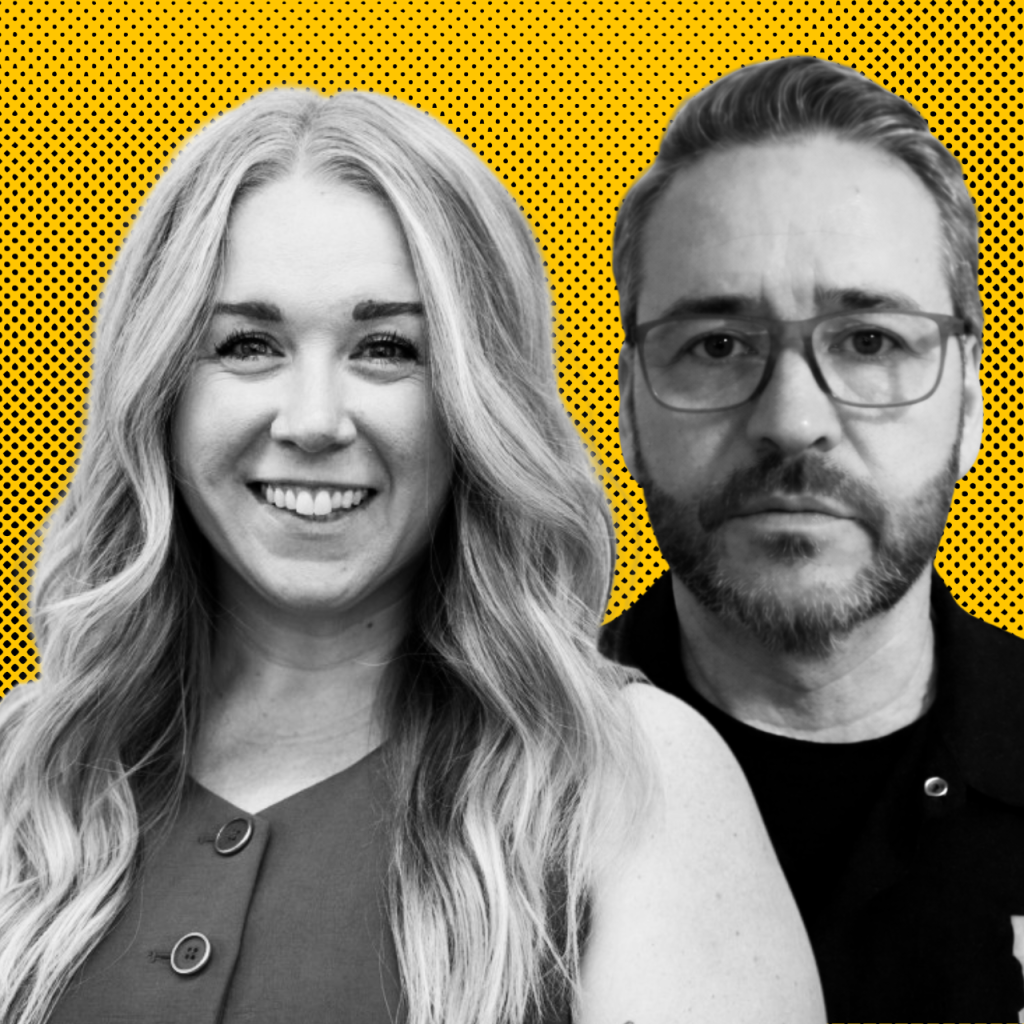
Ray Bercini and Sara Elander join Dr. Sandie Morgan to explore what’s really at stake when a city like Los Angeles hosts the World Cup — and why the biggest trafficking risk might not be what you think.
Ray Bercini and Sara Elander
Ray Bercini serves as Task Force Coordinator and Law Enforcement Liaison at Saving Innocence. With 31 years at the Los Angeles County Sheriff’s Department — including six years dedicated to human trafficking work — Ray brings deep cross-sector expertise to the intersection of law enforcement and victim services. He has been instrumental in building the LA Regional Human Trafficking Task Force into one of the largest co-located task forces in the nation, and has played a key role in preparing Los Angeles for major events including the Super Bowl, FIFA World Cup, and LA28 Olympics.
Sara Elander is Director of Programs at Saving Innocence and Victim Service Coordinator for the LA Regional Human Trafficking Task Force. With over six years of experience in program management and trauma-informed care, Sara leads a team of crisis case managers and oversees survivor-centered services across LA County. She holds a Bachelor of Arts in Community Advocacy and Social Policy from Arizona State University and is committed to healing-centered approaches that empower survivors toward long-term recovery and stability.
Key Points
- The widely repeated claim that major sporting events dramatically spike sex trafficking lacks supporting data — but the absence of proof isn’t proof of absence, and LA is launching a research study around FIFA to finally generate real, local data.
- Labor trafficking is the more evidence-based concern around large-scale events, with exploitation rising sharply in the lead-up to events through construction, hospitality, and vendor supply chains.
- The LA Regional Human Trafficking Task Force launched a Sports and Major Events Committee with roughly 30 members and six subcommittees, designed as a legacy infrastructure that can serve future events beyond just FIFA.
- Coordinating tips during a major international event is a complex, unsolved challenge — multiple agencies including FBI, HSI, LAPD, and LASD will all have tip lines, and the team is working to centralize reporting without losing coverage.
- One of the most important lessons from the 2022 Super Bowl was that outside organizations parachuting in with good intentions — but without coordination — can undermine local trust and misdirect survivors away from local resources.
- Effective multi-agency collaboration requires every organization to clearly define what they uniquely bring to the table, stay in their lane, and go through a vetting process before engaging in high-stakes response work.
- Sara’s definition of success after FIFA centers on community empowerment — if hospitality workers, transportation staff, and community members leave better equipped to identify and report trafficking indicators, that’s a lasting win.
- Ray’s measure of success is straightforward: survivors of all forms of trafficking — sex and labor — are identified, connected to resources, and treated with dignity, which no single agency can accomplish alone.
Resources
- Saving Innocence
- LA Regional Human Trafficking Task Force
- National Human Trafficking Hotline
- Compass Connections
- Blue Campaign
- LA Regional Crime Stoppers
- Global Center for Women and Justice
- Ending Human Trafficking Podcast
Transcript
[00:00:00] Ray Bercini: Are they doing things legally?
[00:00:01] Not driving down Figueroa corridor in a white van and trying to grab girls off the street. You can’t do that! That’s kidnapping.
[00:00:15] Anna: When the World Cup comes to your city, everyone warns about sex trafficking, but what if the bigger risk is something you’d never think to look for? This episode talks about community readiness, what law enforcement, victim service providers and local partners are doing now to reduce chances of a reactive response later.
[00:00:32] Ray and Sara share how LA is planning for FIFA with a standing committee, stronger reporting pathways, and training for industries like hospitality and transportation. Hi, I’m Anna. I work at the Global Center for Women and Justice and I help produce this show. Today, Sandie talks with Ray Bercini, task force coordinator and law enforcement liaison with Saving Innocence and Sara Elander, director of programs at Saving Innocence and victim service coordinator for the LA Regional Human Trafficking Task Force.
[00:01:01] And now here’s their conversation.
[00:01:04] Sandie Morgan: I’m so happy to welcome to the Ending Human Trafficking Podcast, my longtime friend Ray Bercini.
[00:01:14] He’s retired LA County Sheriff’s detective and lead coordinator for the LA Regional Human Trafficking Task Force, and Sara Elander, director of programs at Saving Innocence. Welcome to the podcast.
[00:01:34] Ray Bercini: Thank you.
[00:01:35] Sara Elander: Thank you
[00:01:36] Sandie Morgan: So I wanna dive right in and understand for both of you what your current roles are at Saving Innocence and how your work intersects with the LA Task Force.
[00:01:53] Ray Bercini: Sure, I’ll start. So I am our director of programs, which means that I am managing all of our direct service programming for survivors of human trafficking. So I supervise six crisis case managers who are on call 24/7 to respond to the needs of primarily survivors of human trafficking, but also law enforcement and community partners to help them navigate how to address and intercept human trafficking.
[00:02:23] Sara Elander: And then I also supervise our Lived Experience advisor. So we have an advisor with lived experience who helps inform our programming, who helps inform conferences and youth led programming. And I get to lead our efforts in the LA Regional Human Trafficking Task Force as one of our programs that I’m super honored to do, which is working side by side with Ray.
[00:02:46] In managing our engagement with the LA County Sheriff’s Department, HSI, the US Attorney’s Office, navigating those different relationships and how we partner together to serve the community. I’m also the victim service coordinator for the LA Regional Human Trafficking Task Force.
[00:03:04] So it’s a dual role. And I coordinate partnerships with other victim service organizations across LA County.
[00:03:11] Sandie Morgan: I’ve watched you for the last several years as you have grown into this amazing leadership role and just wanna give you a shout out to all of our listeners for your leadership and how you have managed growth. That is a leadership skill that we all have to struggle with at some point. And you’ve done an excellent job.
[00:03:38] So thank you. Ray, tell us about you.
[00:03:43] Ray Bercini: Well, I have to jump in here too with Sara. Sara is amazing. She’s been fantastic in the charge and the lead of all this, especially coming in to the LA Regional Human Trafficking Task Force efforts. Like you mentioned, Sandie, I was 31 years with the LA County Sheriff’s Department.
[00:04:04] My last six years I was with the Human Trafficking Task Force. I wrote a grant in 2015. I know you’re familiar with that. And so it’s been a journey and I’ve learned a lot on the law enforcement side and really realized how important the victim services side of this all was, especially with these complicated, nuanced investigations, to have advocates and social workers and clinicians and pretty much everybody outside of the criminal justice world.
[00:04:41] It’s been amazing to have these partnerships. I came into Saving Innocence about a year after I retired in 2020 from the Sheriff’s Department. They were starting efforts around the Super Bowl in 2022. And so they brought me back in for that. And then shortly after that we had re-upped the grant
[00:05:04] for the human trafficking task forces’ nationwide efforts. And so I came under Saving Innocence because that’s who I recommended, as well as the Sheriff’s Department wanting to partner with Saving Innocence. And so I’ve been with Saving Innocence since then. I am the co-coordinator and
[00:05:43] I’m the law enforcement liaison for the task force, so I’m kind of a hybrid working between the victim services and government agencies and being able to tap into all my partners from law enforcement.
[00:05:43] Sandie Morgan: Ray, I know that about you. You are a hybrid, so we get really good gas mileage working with you, and we appreciate you very, very much. And you just mentioned, as you moved into a new role, it was Super Bowl time. While Los Angeles is getting ready to host global events like the FIFA World Cup and LA28 Olympics,
[00:06:10] what responsibilities or planning efforts have been central to your work recently?
[00:06:19] Sara Elander: Yeah, so the LA Regional Human Trafficking Task Force last summer launched what we’re calling the Sports and Major Events Committee, that has about 30 members right now, all from different government agencies, nonprofits, and different sectors to collaboratively address
[00:06:42] the storm that’s coming to Los Angeles in terms of major events and sports. And so we are meeting every other week. And it is a collaborative effort with law enforcement — all levels of law enforcement — victim services, media and public awareness. The National Human Trafficking Hotline is a member, really collaboratively addressing the issue, not just for FIFA.
[00:07:14] And so last summer we started to get invitations to the host committees for these major events, LA28 and FIFA World Cup, and recognizing that those communities are incredibly important. And we have incorporated those parties into what we’re doing. But we recognize that they are individualized events.
[00:07:39] LA28 is planning for LA28. FIFA World Cup is planning for FIFA World Cup, and we wanna be at the table for all of those things. But we can’t keep recreating the wheel every time an event comes into town. And so we had this idea to come up with a committee that could be a legacy protocol, a legacy community that could go from event to event, major sports to conventions to other things that the city
[00:08:09] and the county of LA could rely on. And so we brought in all of our major partners — the city of LA, the board of supervisors, the LA County Sports and Entertainment Commission, all of the host committee contractors that have been managing some of the human trafficking and human rights campaigns —
[00:08:30] really to bring everyone together and say, what do we need to do to address this issue? So that we can have something that our community can rely on. And that we can have a coordinated response that is collaborative, that is in partnership with all of the right entities, and that we make an impact.
[00:08:48] And so that’s what we’ve been working on. The World Cup is coming like a storm. I keep calling it a storm, but it feels like it’s gonna be a storm. It’s an
[00:08:59] international event, so we’re trying to prepare for it.
[00:09:03] Sandie Morgan: How is law enforcement preparing, Ray?
[00:09:06] Ray Bercini: Yeah, law enforcement, they’re at it. I mean, we just came off of a big operation, Reclaim Rebuilt, that we do every year. It was very successful. And so as the sheriff and the DA and the other chiefs had said — all of them had said — the work doesn’t end after the big annual January Human Trafficking Awareness Month event, that it continues.
[00:09:40] And so law enforcement, they’re gonna be gearing up. They’re gonna be looking at things that they can identify as it comes up, because there’s gonna be so many people coming in, especially around these international events like FIFA and LA28. And so you’re gonna have so many people coming in. Law enforcement is prepared. They’re dealing with the Emergency Operations Bureau out of the Sheriff’s Department so that they can look at the security issues. And so some of the PDs — the police departments like Inglewood PD, Pasadena PD, specifically for the SoFi Stadium and Rose Bowl — they’re gonna be focused on security
[00:10:39] in and around the event. And then they bring in a lot of agencies to add to their efforts as far as the security piece. So they’re really relying on everybody else. And when we talked about the coordination piece, the LA Regional Human Trafficking Task Force operates with 55 agencies in its day to day,
[00:11:06] having communications across each sector and each agency and nonprofit. And as you know, Sandie, because Vanguard did an amazing job for action research, which was important because building this over the last 10 years has been important to us knowing what our barriers were, what the challenges are, what the gaps in services were.
[00:11:35] And so now we’re up against these big major sporting events, and you get not just the 55 agencies, plus the other people that want to get involved, volunteerism, all that kind of stuff.
[00:11:50] Sandie Morgan: Let’s talk about that because these large events raise a lot of public concern about increases in trafficking. So from your perspective, what do you think we should be emphasizing based on our past experience as we prepare for things like World Cup or Olympics?
[00:12:19] Ray Bercini: Yeah. And real quick, can we address data? Can Sara just address the data issue on what the research shows with the limited amount of research and data?
[00:12:33] Sandie Morgan: Love data. You guys are
[00:12:34] Ray Bercini: Yeah, making me really happy.
[00:12:38] Sara Elander: Yeah, I mean we did a research landscape analysis early on to try to determine what the data says. We see the campaigns every year — Super Bowl, where it’s like the largest human trafficking event of the year — or major sporting events, increases, quadruple sex trafficking in the host city or whatever.
[00:13:03] And that data doesn’t exist. The data doesn’t show that there is a huge spike in sex trafficking around major events. But there is no data that disproves it. And this has been my thing for the last six months — there is no data that shows that it doesn’t exist,
[00:13:23] it’s just that there is no data that proves that claim. And there’s actually data that proves and shows that labor trafficking around these large scale events — in the lead up to major events like the Olympics in most host countries —
[00:13:43] significantly increases labor trafficking and labor exploitation because of the amount of work that has to get done in creating stadiums and creating transportation avenues and things like that. And then all of the concessions and vendors and all of the things that surround a major event in a large city.
[00:14:01] And so we’re actually in the process of developing a research study around FIFA that we can use to see what happens in a city like LA when it comes to human trafficking. What increases, what decreases, what is proven, what’s not? What are some of these myths that we can bust in the moment, to be able to then use that data to inform how we address Super Bowl, to use that data to inform how we address LA28, rather than going off of large
[00:14:36] misconceptions. And the thing about the misconception about sex trafficking is that it’s not that sex trafficking doesn’t exist during major events, because sex trafficking exists on every night in Los Angeles. So it exists, so it will be present. There’s just not a significant enough increase to say that
[00:15:01] major events and sporting events are the major drivers of sex trafficking, or human trafficking generally. So we are really looking to do research over the next three years to be able to contribute to the landscape of what happens in terms of human trafficking, what happens to the city, what is the impact to vulnerable populations,
[00:15:25] what’s the impact to law enforcement, where should we be focusing our law enforcement efforts, so that we can really hone in on the right things — major in the majors.
[00:15:36] Sandie Morgan: So I’m signing up, I’ll join the team because I’ve always had this sense that early on we didn’t have the same level of training with all of our law enforcement. And so it was happening and no one was identifying it. But now it is a much more identifiable exploitation. And I love that you mentioned the labor trafficking aspect of that.
[00:16:09] I’ve already been talking to our Western Regional Bureau of Labor representative Paul Chang about that, and there’s great concern about people on construction sites and in the hospitality industry. So Ray, what does preparation look like from a law enforcement and intelligence coordination perspective?
[00:16:36] Ray Bercini: Yeah, so I think it’s looking at vulnerabilities. We’re now realizing that there are more labor trafficking cases — you just don’t know what you don’t know. You don’t see it. So a lot of times
[00:17:00] people are like, oh, labor trafficking — what is it? Does it exist? How come there’s not very many cases nationwide? And it is a nationwide phenomenon, but the stats on it, as far as trafficking arrests and prosecutions, are very low compared to commercial sex trafficking. And so it’s really looking at the vulnerabilities — certain areas, like you mentioned, construction. Hospitality’s huge.
[00:17:27] Right now everybody’s asking — we’re part of the national coordinators platform, and I think there are six or seven states that are involved in FIFA plus some other countries. And so everybody’s asking those same questions. Who are the vendors? Not who are the people running the vending operations like food trucks and carts and all that,
[00:17:52] but who owns these vending apparatuses? And so looking at that and seeing who contractors are — are they legitimate contractors? Are they doing what they’re doing? Because we know there are layered aspects. We looked at the Palisades and Altadena fire disaster cleanup contractors, and it really leveled down to where it got shady.
[00:18:21] And so looking at those types of aspects, we can start to see what things law enforcement should be directing their attention to, because otherwise we’re chasing what we call ghosts. And when you’re chasing ghosts, that’s not the best use of your deployment, especially with law enforcement agencies across the nation who are understaffed — big time understaffed. So
[00:18:55] to really hone in on tips, leads, looking at vulnerability, labor jobs and that type of stuff — that’s the important part for law enforcement to focus on.
[00:19:12] Sandie Morgan: So you mentioned tips and leads, and just a few minutes ago we were talking about organizations and volunteers coming in. How does that impact the tips and leads? Who’s answering the phone when we have thousands of people coming and
[00:19:46] they have been trained in how to identify human trafficking, usually sex trafficking more so than labor?
[00:19:46] So how do you plan for the increased volume of calls and how do you assess those tips? Sara’s smiling — it’s like, oh my gosh, yes. You just read my mind.
[00:20:02] Ray Bercini: Yeah. Sara.
[00:20:04] Sara Elander: I mean, that’s a great question, Sandie. There will be several different platforms for people to be calling in tips. As a part of our committee, we have six subcommittees and one of them is a law enforcement and operations subcommittee, where law enforcement will be coordinating all of their event operations, but then also coordinating where are we sending people?
[00:20:34] Because there have to be directions for people to be reporting tips. And so we have FBI, LAPD, HSI, LASD, all represented with additional small law enforcement agencies that will all have the capabilities to take on tips. And so we have Crime Stoppers, which has consistently been
[00:20:56] a really helpful and reliable way for people to report crime. That will be one of them. FBI and HSI both have their human trafficking tip lines where they’re going to increase their on-call roster of agents and staff who will be monitoring during the games.
[00:21:18] And we also, in partnership with the Human Trafficking Hotline, making sure that anything that gets caught there — because that has always been a catchall where people will call the National Human Trafficking Hotline for both identifying survivors, survivors calling in and just needing law enforcement —
[00:21:36] and right now we’re in the process of updating our protocol with the National Human Trafficking Hotline, making sure that the new contractor, Compass Connections, who is incredible, has the most accurate, up-to-date phone numbers and phone tree to be able to get to exactly the right people at the right time.
[00:21:56] So we have a bunch of different options and there will be different connections per avenue, whether they’re calling in from wherever they’re getting the number from. But we’re also working hard in outreach to come up with a plan for communities to have the same number so that we’re not throwing out a bunch of different phone numbers.
[00:22:23] And so trying to coordinate with hospitality, restaurants, transportation entities to make sure that we are centralizing as much as possible, but also diversifying so that people are getting to the right place at the right time. So it’s gonna be a little bit of a dance. We haven’t quite figured it out.
[00:22:45] And thankfully not a lot of other FIFA host cities have figured it out either, which makes me feel a little better. Everyone’s trying to figure it out. And so we have a lot of great options and a lot of really incredible and bought-in partners, and so I feel encouraged.
[00:23:03] A little overwhelmed, but encouraged.
[00:23:05] Sandie Morgan: So what this makes me think is that we know we’re gonna get tips that are people with great intentions, but probably not very viable tips. But at the same time, we’re going to be sifting through every tip so that the ones that do have a place where we can actually do something, something does happen. And particularly
[00:23:46] in my world — because you know, Ray and Sara, that I work very closely with Derek Marsh, also former law enforcement — law enforcement has a whole set of parameters that have to be met, but victim services we’re able to respond in a much more nimble fashion. Tell us just a little bit about how you’re
[00:24:11] organizing all of those victim service providers in our region.
[00:24:18] Ray Bercini: Real quick, and I’ll let Sara expand on it, but in the coordination piece, it’s important for everybody to realize that everybody that comes into this needs to know what their mission is. We all share the same vision — the podcast, Ending Human Trafficking.
[00:24:41] What people who are coming into this need to understand is their value, what they bring to the table. And that’s one of the most important things when we first sat down back in 2022 to do Super Bowl — to define what each organization brings to the table, what’s their special niche that makes them unique to these efforts so that we can
[00:25:08] set the lanes and people stay in their lanes and not cross over back and forth trying to do everything. And that’s why even with the LA Regional Human Trafficking Task Force and victim services agencies that are all throughout LA doing great work — having that in mind, what do I bring to the table?
[00:25:34] What’s our value? And how can we contribute to what everybody’s doing without being redundant or overlapping? And that’s somewhat important when outside agencies come in from other states to drop into these big events. They need to come and provide their mission and what they bring to the table.
[00:26:00] Sandie Morgan: How do they do that, Ray?
[00:26:04] Ray Bercini: Well, the mechanism that we’re trying to set up is that there’s a vetting process — and who’s gonna be vetting people who are coming in? So it starts with the LA Sports and Entertainment Commission. They contract the nonprofit group, the FIFA Host Committee right now.
[00:26:27] Gabriel Sandoval is leading that, and so when they’re trying to figure out what is human trafficking, what does it mean, what is it all about — we’re saying, hey, you guys need to come to people who know how to identify who the groups are, what they’re bringing to the table. Are they doing things legally?
[00:26:48] Not driving down Figueroa corridor in a white van and trying to grab girls off the street. You can’t do that. That’s kidnapping. So it has to be organizations that are gonna bring added value to the efforts that we’re doing. And there are some amazing groups out there that do some amazing things.
[00:27:11] And so it’s just a matter of, hey, let us know what you guys do so that we can say, yeah, we could really use more of that, or this isn’t something that we even address. Right now it’s going to depend on the subcommittees — there are six committees under the sporting events and major sporting
[00:27:35] events — and then everybody can align with what committee they think is beneficial to them and their efforts. So once they get the information about who’s interested, who wants to come in, then we can get it to where we can have our vetting team go through it. Have you heard about these people, Sandie? I know you and I have done this already — who’s this group,
[00:28:05] what do they do, have you heard of them? That kind of stuff.
[00:28:09] Sandie Morgan: Sara.
[00:28:11] Sara Elander: Yeah, I think that part of the reason that Saving Innocence in particular, from the regional task force, has taken — and we’ve taken the lead on this — is that we are the most flexible, the most nimble, the most able to draw in partnerships and collaboration. And so that has always been and probably will continue to be the strength of victim service providers and nonprofits in general — to be able to really adapt to the current needs at all times.
[00:28:46] And so we’ve really leaned into that. But also on the other side of the same coin, being that flexible and adaptable often makes providers feel a little unreliable to law enforcement. And so in this world where we are being good partners and we are operating in partnership and in collaboration also
[00:29:15] with the understanding of strategy and operations and safety, recognizing that there are some protocols that need to be in place in order for law enforcement to feel really comfortable with the service providers that are participating in something like this. And so that’s why we created this space where
[00:29:37] there could be law enforcement on all levels involved, nonprofits at all levels involved — HSI, FBI, LAPD, Sheriff’s Department — but also our media outreach campaign. It’s a penalty — the Blue Campaign with HSI. It really is this very collaborative
[00:30:05] space where relationships and trust are being developed so that we can move forward as a team. There are 30 of us in this leadership team, and then there are six subcommittees where people get to address all of these different categories and really speak into the spaces where they have expertise. But also there are law enforcement agencies that have an opinion about the media and the public awareness campaign — what is said and what’s done.
[00:30:28] And there are NGOs that have input to the law enforcement operations. And so really being able to cross over and say, I might not be the expert, but I have an opinion — and really listening to that. I think that creating a space that is collaborative but trusted — which often in these spaces, because we’re operating on crisis response, mistakes are made,
[00:30:52] we always have different opinions, law enforcement is solely focused on one thing and victim services is solely focused on another — my biggest encouragement in our regional task force is how much cross collaboration and significant consideration there is for each other and the priorities of each agency.
[00:31:15] And really being able to see it from a different perspective and adjust — not just, I’m a law enforcement agent and this is my priority — but really listening to the needs of the other people in the room. And I think that will allow us to vet who’s coming into the city. And I was loosely a part of the 2022 Super Bowl —
[00:31:36] I was actually a program manager at the time managing our crisis program. But I heard from the lore, as you know, there were just a lot of agencies that parachuted in and provided information that was in good spirit. But it made it hard for law enforcement to trust what they were doing because they came in with a different set of priorities, and then they were offering different services and different directions to survivors
[00:32:13] that then didn’t point back to local resources. And so survivors were pointed in a national direction and not a local direction. And so really being able to bring those people to the table and say, how do we point people to local resources and collaborate with all of our partners to make sure that we trust each other to point people in the right direction.
[00:32:37] Sandie Morgan: Wow. So much more conversation that we’re going to look forward to. We’ll meet again after FIFA to see what you think then. But for today, tell me in a short statement — what does success look like for you after FIFA? We won’t even address LA28 yet. We’ll wait.
[00:33:08] Ray Bercini: Yeah. So I’ll start. Just looking at what we’re talking about with coordination,
[00:33:17] I think it’s gonna be a big success. But the success that we’re really all talking about is, can we recover individuals who are trapped in this horrific crime of human trafficking? That’s all forms — commercial sex and labor.
[00:33:43] Those are the things that, speaking from the victim service world, are the most important — that survivors and clients get the resources that they need. And one agency can’t do that. Saving Innocence definitely isn’t gonna be able to do all that. So we need to partner with as many
[00:34:06] folks out there that are willing to step into this effort. But warning to everybody, the caveat — once you step in it, it’s hard to get out. I retired five years ago and I’m still involved in this, and happily, because I’m really passionate about this.
[00:34:24] Sandie Morgan: Sara, what does success look like the day after FIFA?
[00:34:30] Sara Elander: I echo what Ray said. Best case scenario is that there are survivors of human trafficking that experience some level of freedom and some level of hope, and being on the other side of that experience. That is obviously the top priority — that survivors are identified and seen and treated with dignity and respect and that they see justice.
[00:35:02] In April we’re hosting a really large-scale training event for all hospitality, transportation, tourism, and community members — all of those industries — so that they can really understand and identify the indicators of human trafficking. And on the day after FIFA, if more people know what to look for, what the indicators are, and how to identify and what to do
[00:35:29] when they encounter someone that they suspect might be a victim of human trafficking — that’s a win for me.
[00:35:35] And so if we can equip and empower community members and business owners to be able to identify the signs of forced labor or sex trafficking and do something about it in a way that is informed and educated — I don’t know what more success we could have. And so I think those are the things that I’m hopeful for.
[00:35:58] Sandie Morgan: Wow. What a great note to end this podcast on. And do I have your agreement — we’ll come back and revisit this right after FIFA?
[00:36:09] Ray Bercini: Yes.
[00:36:11] Sara Elander: Absolutely. Give me
[00:36:12] like a month.
[00:36:12] Sandie Morgan: Oh, you need a month? Okay, we’ll do that, but we are with you. We’re going to follow you. We’re going to be part of that community response.
[00:36:26] Thank you so much for joining me today.
[00:36:28] Ray Bercini: Thank you.
[00:36:30] Sara Elander: Thank you.
[00:36:31]
[00:36:32] Anna: A big thank you to Sara Elander and Ray Bercini for helping us understand what it actually takes to get ready for something like FIFA in Los Angeles.
[00:36:40] Listeners, if you like this conversation, make sure you check out our website at endinghmantrafficking.org for tons of in-depth show notes and other resources. If you’d like to help us grow this podcast, you can start by sharing this episode with someone and connecting with us on Facebook, Instagram, or LinkedIn.
[00:36:56] And as always, thanks for listening.
