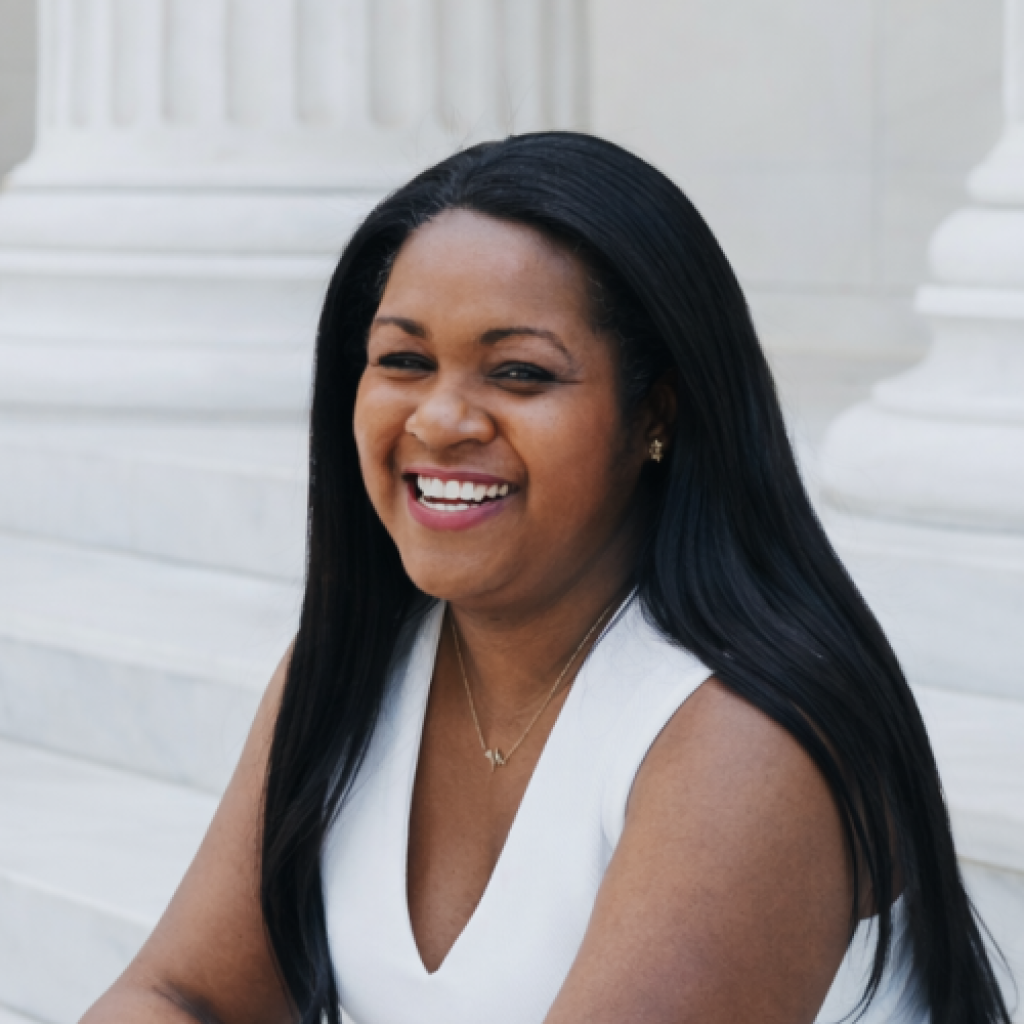
Dr. Nanyamka Redmond joins guest host Ruthi Hanchett as they explore how everyday adults — parents, teachers, coaches, and neighbors — can become a powerful protective factor in young people’s lives by building the kinds of relationships that help youth thrive and navigate risk.
Dr. Nanyamka Redmond
Dr. Nanyamka Redmond is a Research Scientist at the Search Institute, a nationally recognized organization dedicated to advancing research and practical frameworks that help young people thrive. She holds a PhD in Applied Developmental Psychology from Fuller Theological Seminary and a Master’s Degree in Clinical Psychology, Marriage and Family Therapy from Azusa Pacific University. Her work focuses on developmental relationships, youth resilience, and advancing equitable, relationship-centered approaches to youth development and wellbeing. Dr. Redmond specializes in translating developmental science into practical tools for educators, families, youth-serving professionals, and community organizations, emphasizing culturally responsive and strengths-based approaches that center young people’s lived experiences. She has also served as Director of School Partnership for Character Lab, co-founded by Angela Duckworth, and is a keynote speaker at the Global Center for Women and Justice’s Ensure Justice Conference.
Key Points
- An anti-trafficking program can teach warning signs, but it cannot replace a caring adult — if a young person doesn’t feel seen, safe, and valued, information alone won’t protect them.
- The Search Institute’s 40 Developmental Assets framework identifies a combination of internal strengths and external supports that young people need to thrive, and research consistently shows that the more assets a young person has, the better their outcomes.
- Developmental relationships go beyond good relationships — they are defined by five specific elements (express care, challenge growth, provide support, share power, and expand possibilities) that research has shown to directly impact positive youth outcomes and reduce risk.
- For youth who have experienced trauma, relationships have often been transactional or harmful, so the experience of someone who cares without strings attached can be surprising — which is why consistency and small, repeated moments of connection matter more than grand gestures.
- Belonging is not just a buzzword — when adults work to help every young person feel genuinely seen and valued in the spaces meant for them, it builds the sense of dignity that serves as a foundation for resilience.
- Sharing power with young people doesn’t mean abandoning guidance; it means entering those relationships with a frame that sees adolescence as an age of opportunity rather than a period of storm and stress.
- Resilience is relational — it is not something young people build alone, but something that grows when multiple caring adults across their ecosystem show up consistently over time.
- Adults who want to support youth leadership can start with incremental steps: invite young people to co-create the questions, let them lead the conversation, and hold the barriers gently without squashing the vision.
Resources
- Search Institute
- The 40 Developmental Assets Framework
- Global Center for Women and Justice
- Ending Human Trafficking Podcast
- Age of Opportunity: Lessons from the New Science of Adolescence by Laurence Steinberg
Transcript
[00:00:00] Nanyamka Redmond: when the adults show up in a way that’s safe and exudes safety, young people will gravitate towards that.
[00:00:16] Ruthi Hanchett: An anti-trafficking program can teach warning signs, but it can’t replace a caring adult. If a young person doesn’t feel seen, safe and valued information alone won’t protect them.
[00:00:27] In this episode, I’m talking with Dr. Nanyamka Redmond about how everyday adults, parents, teachers, coaches, neighbors can become a protective factor by building the kinds of relationships that help our young people thrive and navigate risk.
[00:00:41] Hi, I’m Ruthi Hanchett. I’m part of the Global Center for Women and Justice at Vanguard University, and I’m honored to host today’s conversation. Dr. Redmond is a research scientist at the Search Institute where she focuses on developmental assets, relationship centered youth development and resilience. And now here’s our conversation.
[00:01:00]
[00:01:02] Ruthi Hanchett: Welcome everyone. My name is Ruthi Hanchett. I am a member of the Global Center for Women and Justice at Vanguard University and I’m an adjunct professor of human trafficking. I am excited to be your guest host today on the Ending Human Trafficking Podcast. I am grateful
[00:01:16] for this opportunity today because I have a guest that I am really excited and want you all to know.
[00:01:22] Nanyamka Redmond: Our guest today is Dr. Nanyamka Redmond. She’s a research scientist at the Search Institute, a nationally recognized organization dedicated to advancing research and practical frameworks that help young people thrive. She holds a PhD in Applied Developmental Psychology from Fuller Theological Seminary.
[00:01:39] Ruthi Hanchett: A Master’s degree in clinical psychology, marriage and family therapy from Azusa Pacific University. She will also be serving as our keynote speaker at the Global Center for Women and Justice’s Conference Ensure Justice where she will expand on the role that relationships play in prevention and resilience building among youth. Dr. Redmond, welcome to the Ending Human Trafficking Podcast.
[00:02:03] Nanyamka Redmond: Oh, thanks Ruthi. This is awesome.
[00:02:06] Ruthi Hanchett: I am so happy to have you with us today, and connect with you because you and I have a lot of what I would call shared parallel history.
[00:02:14] Nanyamka Redmond: Right?
[00:02:15] Ruthi Hanchett: yeah. I have been a fan of the Search Institute for many years. I worked for World Vision International from about 2004 to 2013, and we used the positive Youth Development Assets framework in a lot of our programming around the globe.
[00:02:28] And even now as a professor, when I teach my classes on human trafficking, I often will bring up the 40 developmental assets as an example of preventative approaches that are focused on youth empowerment rather than just those scary things we wanna do to keep kids safe.
[00:02:43] Nanyamka Redmond: Right. That’s awesome. Glad to hear that it’s being used in the classroom.
[00:02:48] Ruthi Hanchett: So. We have that a little bit of shared history, Dr. Redmond, but I wanna start with your beginning story. So tell me a little bit about what drew you first to this idea of studying youth development and the roles that relationships play in helping young people thrive.
[00:03:03] Nanyamka Redmond: Oh yeah, that’s a great question. And the question that I asked myself when I was about seven years into teaching, as a high school teacher and really had been digging in deeply around these ideas of what the students were bringing to me, right? So my classroom was that classroom that at lunchtime, all the kids were there.
[00:03:31] I didn’t get a lunch to myself. there were always a lot of kids there and they were coming to me and bringing to me, you know, some pretty heavy things that were outside of the curriculum, things like divorce and, as they’re processing their own lives and next steps and things like that.
[00:03:49] And my hope was that I was giving them what they needed, but I really wasn’t sure, and wanted to do more to understand both what they needed. And to figure out how to get that out into the world. There were so many teachers who were like me, I’m not the only one who had a, you know, lunchtime packed classroom.
[00:04:16] and so I wanted to think, okay, well what are the strategies? What are the tools that teachers, who are deeply relational and want to be able to step in and intercede and help to see their young people thrive? So it first started in the classroom. it’s, yeah, it first started in the classroom.
[00:04:35] Ruthi Hanchett: I’m sure you’re a great teacher.
[00:04:37] Nanyamka Redmond: I hope so.
[00:04:38] Ruthi Hanchett: Yeah. And it’s great that it started with that curiosity, wanting to do better for your students. I wonder, was there a point in that journey when you were asking these questions and learning where you came to realize how powerful these positive assets development process or tools were and how that is a prevention strategy?
[00:04:57] Nanyamka Redmond: Yeah, well, I observed a couple things. One, I recognized that all students had this rich capacity for depth, right? So even the students who may have appeared to be struggling in academics or any other area, they still had really great strengths.
[00:05:23] And so that was there across the board, all the students. And then as I’d been in the field for a while, like I said, I ended up teaching for eight years total before I left the field. and then that time, you know, I saw generations of students come through. So students who became adults and then started their own families.
[00:05:43] there were students that were surprises in terms of how well they were doing, and then there were students that weren’t a surprise. and I did begin to wonder, like, okay, what was it about the ingredients, let’s say, that would lead one student to do really well? Other students who may not have been doing well, at least within that small timeframe.
[00:06:04] and students who did, and sort of like my pseudoscience that I did a lot of, I was a psychology teacher by the way, so I always was interested in both teaching and learning more about these things.
[00:06:16] Ruthi Hanchett: I think that’s so great. I’ve often wondered those same questions, especially in my previous work, working with some kids in really tough situations who’ve experienced a lot of trauma and then working with survivors of human trafficking. You know, we constantly are asking what is it that makes a difference, where some are incredibly resilient, incredibly brave, and just rise above it and others where it can be really crumbling.
[00:06:40] I think that’s the secret we all wanna know.
[00:06:41] Nanyamka Redmond: yeah. Yeah. Like, what’s the answer? Yeah. I’ve got some thoughts, but my thoughts will be more revealed as we go through our talk together.
[00:06:51]
[00:06:52] Ruthi Hanchett: Okay. Yeah, we all wanna know. Well, maybe we can start with the beginning because I think many of our listeners do work with survivors of human trafficking or maybe in education like you, they are teaching or working with young people. They’re in the areas of abuse prevention or advocacy, but they may not be familiar with the concept of the developmental assets.
[00:07:12] And could you begin at the beginning and explain for us what the developmental assets are and how they are foundational to our understanding of youth wellbeing?
[00:07:20] Nanyamka Redmond: Yeah. Oh, so developmental assets, which has been Search Institute’s more pioneering work. The 40 developmental assets — you’re not the only one that when I go somewhere people are like “developmental assets” as they hear Search Institute. But you know, and those are the folks who know this stuff who may have known of Search Institute, but as you mentioned, a lot of folks may not know.
[00:07:46] Developmental assets are a combination of internal strengths and external supports that young people need in order to live those great, healthy, safe, thriving lives that we want for them. So after years and years of research, a lot of work went into the development of the developmental assets.
[00:08:09] These aren’t just like random 40 — it was a lot of work in the research space that then led to these 40 components. And I would say summatively, they include supportive relationships, boundaries and expectations, social emotional skills, particular identities, understanding of positive identity formation and a sense of purpose.
[00:08:39] And also there’s some structural components as well. Like what are they accessing, what do they have access to? What types of communities are included in the external support, so it’s not just on the young person and what they have within them, but also what types of external supports are available to them.
[00:08:58] Ruthi Hanchett: I love that. And what I love about this whole entire framework and approach is that we can all play a part in helping to build those, right. I think of that as a mom. I have two daughters and I think about am I giving them opportunities to build those internal assets, you know, to be proud of who they are, to contribute to society, to have power sharing.
[00:09:18] But also, you know, anyone in a community can ask the question of what are those external assets and how can I build them up or contribute so that there’s more for our young people.
[00:09:27] Nanyamka Redmond: Yeah. Absolutely. And I love that — as a parent of three boys,
[00:09:33] it’s the same idea. It’s the same thing as you just described. It’s like, what can I do? But also what can we all do? Right? Raising children today is a lot. And so, you know, it doesn’t have to all be on you.
[00:09:46] Being able to look at the web of connection — the support ecosystem that we like to talk about at Search Institute is so vital. And although parents may indirectly or directly put the pressure on themselves, it really is, you know, the village raises the kid, that concept. And looking at
[00:10:13] the assets and developmental relationships, which we’ll talk about later I’m sure, are all really critical components. So it doesn’t have to be on one person or even one structure. It’s all that that feeds into the whole.
[00:10:30] Ruthi Hanchett: Well, I wonder if you would tell us a little bit more, maybe personal as a parent, what have you done to intentionally build those assets, that village around your kids, what does that look like? How do you make choices in the way that you realize it’s not just all on you, but creating opportunity for your kids to benefit from those opportunities?
[00:10:49] Nanyamka Redmond: Yeah. I drive myself wild sometimes in that, you know, as a parent, like sometimes there’s a point where you can know too much and so you’re deep diving into everything. But one of the things is just being intentional and strategic about
[00:11:05] who pours into my kids. So choosing the right fit of a sports program or the right tutor or a music teacher or something along those lines where you’re thinking not just that this person is really good at what they do, but they really get kids or they get my kids who have unique strengths and things that they’re working through.
[00:11:26] So wanting to really find that matchup, which sometimes it happens and sometimes it doesn’t. So then you’re able to pivot. So that’s another part of parenting — being like, oh, you know what? We thought this was a right idea and it’s not. So being able to make those choices, but ultimately it’s to build around your young
[00:11:44] people who have the values, the understanding of who they are that equals yours, so that you can have them pouring into them so that they’re not getting competing messages. Or things that confuse kids, like, oh, well my mom said this, but you said that.
[00:12:04] And it’s like getting everybody on the same page as much as possible. Because ultimately my kids will grow up and they’re littles right now, but when they’re teenagers, especially — I’m sure some of the listeners are probably parents of teenagers — kids still listen to you, but it’s a different way of listening.
[00:12:23] They will have peers and they will have far more autonomy than when they were little, and you want the folks that are gonna help their thriving versus thwart it. So starting young is one way.
[00:12:40] Ruthi Hanchett: that’s great. I know when we speak to parents a lot through the Global Center, we talk about protection, you know, making sure that they’re safe, that they’re gonna have your child’s best interest at heart. But this is that next level where it’s like they’re gonna invest in your kid and be the kind of role model that you want rubbing off on your child too.
[00:12:58] Right. And I know my mama’s heart, when I see somebody that sees my kid for who they are and values them, it makes me so grateful, right? Because we think our kids are wonderful. But when teachers or coaches or other aunties and people, adults in their lives see them for who they are and love them,
[00:13:18] it is such a gift.
[00:13:20] Nanyamka Redmond: it really is.
[00:13:21] Ruthi Hanchett: Yeah. Well, thank you. This brings us to this idea of developmental relationships, right? And how young people benefit from them. I know your research has really highlighted how critical developmental relationships are as drivers of these assets internally, especially for kids. So could you define what a developmental relationship is and what makes those unique and powerful in shaping how young people grow and navigate risk, especially.
[00:13:46] Nanyamka Redmond: Yeah. Wow. Developmental relationships are more than just good relationships. I think across the board we all understand like, yeah, good relationships and kids having access to good or healthy relationships are a good thing. This takes it a little bit deeper in saying, yes, that’s true, but what are the ingredients or what are the elements of a good relationship that research has shown to directly impact those outcomes that we wanna see, or prevent the things we don’t wanna see, as you’re mentioning Ruthi.
[00:14:21] And so what we found is that there are these five elements that are critical to a developmental relationship, and I’ll try to move through them quickly, but they are express care, challenge growth, provide support, share power, and expand possibilities. So each of these five elements go into the factor —
[00:14:45] if you wanna look at it from a scientific side — the factor of developmental relationships. And any one interaction that encompasses one of those elements is a good thing for a young person. So a teacher often finds themselves in the space of challenging growth, which is supporting a young person to believe that they can do hard things. The coaches as well, and in fact those are some of the highest rated elements when you ask
[00:15:30] students about their experience in school. They’ll often say challenge growth. But also things like express care — expand possibilities is one that we’ve found for adults to be a little bit hard.
[00:15:49] Expand possibilities means that the adult helps to share or shape a vision for a future that could be available to a young person. And I think the challenge there is you’ve gotta really know a kid really well to know what’s going to expand the possibility for them.
[00:16:06] So simply saying, oh, you could be a doctor — it’s like, I don’t wanna be a doctor, I wanna be this other thing. And so you’re thinking you’re expanding the possibility, but it’s not necessarily related to what they want. But those are the five things that accompany a developmental relationship.
[00:16:36] And your question around how does this reduce risk or elevate prevention — it’s having adults who are impacting at each of these different levels that helps a young person develop a sense of self that is confident, that is positive, because there’s this external adult
[00:17:12] who, in some cases didn’t raise me, who believes in me and can see a future for me and is willing to walk through whatever I’m going through elbow to elbow and to give me power in decision making. And so these are really critical elements and I think they are deeply preventative in terms of creating spaces and relationships that are protective.
[00:17:13] That’s the best way I could say it.
[00:17:14] Ruthi Hanchett: Yeah. And I think I wonder if we could dig in a little bit, because a lot of us work in this space with survivors of human trafficking or youth that are very vulnerable, have a lot of risks, right? And oftentimes it’s because home hasn’t been a safe place. Or they’ve experienced abuse and trauma, which is oftentimes something that we see as a precursor to then sexual exploitation as children.
[00:17:37] So what does this look like when we think about developmental relationships, especially when you brought up that idea of not necessarily the person that raised you. How can adults be those positive developmental relationships, especially for kids that maybe are at higher risk of human trafficking or sexual abuse or really need that positive relationship in their life.
[00:17:57] Nanyamka Redmond: well for one, for many kids who’ve experienced trauma, relationships have been just transactional. If that even, right — it’s not deep, it’s not meaningful. It’s been harmful. So the experiencing of someone who cares without there being strings attached is one very —
[00:18:30] it is surprising sometimes, where it can be hard for them to really open up and receive the care or the support, because so often it hasn’t been there without some sort of strings attached. And so I tell people who are like, well, what happens? You know, I’m trying with this young person and I’m just not breaking through.
[00:18:52] It’s like, just keep trying and it doesn’t have to be grand. Grand shows of care or support — it could be just the little things. And it takes time sometimes, a lot of time, to break through some of those barriers. But it does happen. And these are just five very key elements to breakthrough and overcome truly unfortunate situations that young people have experienced.
[00:19:27] Ruthi Hanchett: Yeah. I have a lot of colleagues who are more on the therapy side who talk about therapeutic relationships and how oftentimes trauma happens because people have hurt us and we heal when people are connected and loving.
[00:19:41] Right. how critical those relationships can be. So thank you. Yeah.
[00:19:46] For thinking about how they can be both healing, but also preventative as
[00:19:50] well.
[00:19:50] Nanyamka Redmond: Yes. Absolutely.
[00:19:52] Ruthi Hanchett: Well, when we think about parents, educators, those youth serving professionals, what are some of those practical ways that we can intentionally foster these developmental relationships that both help prevent and protect young people, and strengthen their resilience?
[00:20:08] What can we do as adults that wanna be a part of this?
[00:20:11] Nanyamka Redmond: Yeah, as I mentioned before, sometimes it’s the small thing. Right. Micro moments of care, right? Like learning a young person’s name and connecting with them around not just their name, but what interests them. And sometimes it’s hard to know, right? You see a young person and they’re alone.
[00:20:36] You may just wanna find a point of connection. Like, oh wow, I see you reading this book. I’ve read that book before. Or the other day I saw a little girl at a clinic that we were running and she just had like the cutest little outfit and it was pink. And I was like,
[00:20:54] I really like your outfit. You think they make one in my size? And she just giggled and ran off. And again, I only saw her for a little bit, but someone having an opportunity to connect in these small moments, these small opportunities. And like I said, I was a teacher before and I know that that could be hundreds of kids that one teacher may be impacting.
[00:21:18] And often we hear from teachers like, how am I supposed to connect with all of these kids? It’s like, well, sometimes it’s not connecting with every single one on a daily basis, but it’s making the effort to connect with the five or the ones that seem like they’re most at risk and being able to have those connections.
[00:21:37] I think those are really key, more practical micro moments — starting there. I can go into more complex things, but I think starting with the micro moments of care are really critical, because folks don’t have a lot of time to do all the things.
[00:21:53] Ruthi Hanchett: And I think all of us can probably remember our childhoods, someone, some adult that told us we were special, that we had potential, that gave us that care and it sticks, right?
[00:22:05] Nanyamka Redmond: Yes,
[00:22:07] Ruthi Hanchett: I can remember Mrs. Foot in first grade who encouraged me in my reading.
[00:22:10] Nanyamka Redmond: Yeah. Yeah. Yeah. There’s so much, and I think there’s another opportunity — normalizing help seeking. Right. I think that’s another piece. And you know, sometimes it’s just consistently asking someone like, do you need anything? You got anything? And you know, it’s like, oh, and then when they’re saying, I’m okay, I’m good, I’m good,
[00:22:34] and you see them struggling, just being like, let me help you with this just a little bit. Let me offer this as an opportunity. You wanna come to this tutoring session I’m having — whatever that is — and kind of opening access to making it okay to say I’m not okay.
[00:22:54] And that’s a bit harder. But when the adults are safe,
[00:23:00] Ruthi Hanchett: Mm-hmm.
[00:23:00] Nanyamka Redmond: when the adults show up in a way that’s safe and exudes safety, young people will gravitate towards that.
[00:23:12] Ruthi Hanchett: Well, I wanna ask about how schools can foster an environment where these kinds of developmental relationships can take place. I think about a lot of schools and community serving organizations that work with young people. I think they’ve realized the importance of what we would call culturally responsive practices, building safe places of belonging.
[00:23:32] But those ideals can sometimes be elusive. They can be buzzwords we throw around without really understanding how to do it. So for you as a researcher, can you break down a little bit more about what that looks like, feels like. Give us some concrete ways that we can try to create this kind of culture where developmental relationships take place.
[00:23:51] Nanyamka Redmond: I’ll go back to this idea of belonging, right. What belonging communicates to the young person is that I’m seen, I’m valued. I don’t have to be small in the spaces or the opportunities that I’m with this person. So when you start there with this idea that we want all young people to belong, particularly in spaces that are meant for them, like schools, right?
[00:24:19] That they do belong in those spaces. And so how do we help them to feel seen and valued — that really encapsulates the concept of belonging. And doing that may often be dependent on the young person who’s on the other side of the receiving. So for some kids who have always felt like they belonged,
[00:24:48] not a problem. They could just slide on in there. They know they’re seen, they know their value. That’s not a problem. But for other kids who either have been directly communicated that you don’t belong here, for a host of reasons, or a young person who just feels like they don’t fit into the space —
[00:25:10] helping them to understand their belonging is much more involved. So helping them to feel seen means kind of wading through the clutter to know why they don’t feel seen, what has happened to them directly or indirectly within the system that expresses to them that maybe this isn’t the right space for you.
[00:25:34] On top of my mind because I’ve got three kiddos and each with different learning capacities and needs — for kids who have learning differences, for example, school may have often been a place where they have felt insecure because they don’t learn like everybody else. So then how does the system, how can it be responsive to help that young person know that they are seen and valued and belong?
[00:26:02] Well, that may be by providing adequate supports so that they feel like, okay, you get me. Or helping them to feel seen by having a curriculum that directly leads to more acceptance of learning differences. And that’s just one example. There could be a host more depending on a young person’s national identity or language or any of these things that,
[00:26:30] by focusing on belonging, the young person gets a sense of dignity.
[00:26:38] Ruthi Hanchett: Yeah. Thank you for sharing that. I think it makes me wonder about one of the other five pillars — power sharing. Right? So when you mention belonging, it really can come down to asking those kids what makes you feel like you belong or don’t belong in this space. So talk about what it looks like.
[00:26:57] How would a school, especially on a systematic level, ask those questions? How would a school get to know who feels like they belong? How do we share that power so we’re hearing from the young people?
[00:27:08] Nanyamka Redmond: Yeah, I mean there’s a lot — I can give you some really strategic examples of some of the things that I’ve been working on, one of which is coming out of support of a team based out of Minnesota. And they have a really great mission of wanting to open up voice and access to the students all throughout the Twin Cities.
[00:27:38] And so in doing that, they are creating spaces and listening opportunities. So they’re helping to work with schools that are saying, hey, we want to know more about how our students are feeling. So making space — that’s one simple way of being able to say, okay, how do we make space and opportunity to hear the young people? And doing so with great intentionality.
[00:28:06] So not just like, hey kid, what do you think about this? Right, yeah, fill the survey out, move on. But to actually say, okay, we’re gonna host over the next few months, once a week, we’re gonna host these sessions where we wanna hear from you and then let them lead that. So even before the adults come in saying, hey, we have questions —
[00:28:29] like I’m a researcher, I’ve been that person who’s been like, hey, young people, tell me what you think — to actually go a few steps before that to say, young person, help me to craft the questions. Or the young person being able to have access to the adults to say, hey, these are the questions that I have, but you run this infrastructure.
[00:28:50] How do we partner together? You with the power for infrastructure, me — the young person — with the desire to learn more about what my peers are thinking, and then working together. But I’ll add a caveat to that, as I know many adults are probably thinking — at least I know I have at some point — like
[00:29:12] sometimes they come up with some wacky things, right? Young people will shoot for the stars, which I love about youth. Like they will shoot for the stars and not think about all the different barriers to the stars. They’re just like, I’m there. And so that can be tricky to navigate as an adult.
[00:29:30] However, know that you are an adult, you probably have more experience. In some ways they may know their experience better than you do, but you may know what those different barriers are. So gently ask them, okay, so I hear that — don’t squash it — but how can we overcome these different things that are gonna prevent us from reaching that star point? And let’s talk it through.
[00:29:56] So sometimes you have to keep them a little down to earth, but don’t squash the dreams.
[00:30:02] Ruthi Hanchett: Absolutely. I think it’s about transparency and those expectations, listening and then bringing your resources to join them in that process. Right.
[00:30:11] Nanyamka Redmond: Yes, definitely.
[00:30:13] Ruthi Hanchett: Well, I’m excited because you are going to be our keynote speaker for Ensure Justice, our conference that’s coming up — this year it’s Friday, March 6th, here in Costa Mesa, and our theme is Resilient and Ready to Lead. So I’m wondering, thinking about what you’re doing in Minnesota and this particular moment in history, what do you think the people coming — the professionals, the advocates, the community leaders —
[00:30:37] what are you excited to share with us? What do we need to hear at this moment?
[00:30:42] Nanyamka Redmond: Yeah, that’s a great question. When I think about resilience, I think one of the big takeaways there is that resilience is relational, right? Like,
[00:31:04] if resilience is relational, then really being able to internalize and understand for the adults — this idea that the ways in which I connect with a young person is building resilience. It’s giving them the strengths, the thriving that we want to see. And also recognize that it’s not automatic.
[00:31:31] It’s long term. It happens over time. It happens not just with one person, but again, multiple people within ecosystems. Because those of us who have lived a little bit, right, know that life is hard. That you will encounter things that are beyond your control.
[00:31:51] And we want our young people to know that as well, but also to know that there is strength within them and strength outside of them that they can lean on. So that would be one of the big pieces — a little snippet of what I’ll be sharing in the keynote.
[00:32:11]
[00:32:12] Ruthi Hanchett: I love that.
[00:32:13] One more question I wanna ask — many adults want to support young people as leaders, but they may be unsure how to do that effectively. What does meaningful adult support for youth leadership look like? And how can adults create that space for youth to raise their voice, to share power, while also ensuring that they’re safe in that process?
[00:32:35] Nanyamka Redmond: Yeah. One, I think sharing power without abandoning guidance, right? So don’t just throw the young person out there to figure it out. Yes, let them figure it out — don’t go and rescue them all the time — but there should still be some guidance there. And actually, let me go back one step before that point, which I think is still critical.
[00:33:08] It often begins with ourselves and how do we interpret youth, right? How do we interpret just youth in general? There are a lot of messages out there right now. Actually, let me go back even one step before that. Search Institute and others were great pioneers in this idea called positive youth development. It was a direct response to
[00:33:33] this idea that, you know, the teenage years are horrible, it’s so bad, it’s like let’s just skip over — go from childhood to adulthood, let’s forget about adolescence. Right.
[00:33:46] And when positive development, the concept came about, it was like, well no, let’s look at youth and adolescents for what’s going great as well during that time.
[00:33:58] So shifting the narrative, shifting the idea. And that’s the umbrella in which my training lives. So I think we have to ask — all adults who work with young people have to ask themselves, how am I interpreting what this period of time looks like for young people? Because if I’m only believing in the storm and stress model, if I’m only believing that adolescence is a horrible period of development, then I’m probably not going to approach my young people with the right frame of mind to be able to see their full picture.
[00:34:37] So when you instead see adolescents as — as Laurence Steinberg calls it — the Age of Opportunity, right? See it as this is a time period in which there is great discovery, rapid brain development, that comes with so many amazing strengths. Then you can enter into relationships of sharing power and guiding with a frame of understanding that’s going to actually elevate the young person.
[00:35:10] So being able to relinquish some power as an adult is hard. I’ve had adults say like, well, you don’t understand what I’m dealing with with some of these kids. It’s like, okay, well I’m not telling them to take over your classroom. Right. I’m not saying throw out your lesson plans.
[00:35:27] Sometimes it’s incremental steps. Sometimes it’s working with what you know you have to accomplish for a day to meet certain objectives and being able to say, okay, can I effectively teach this concept by letting a young person do it instead, giving them an opportunity to do it. So maybe that’s what it looks like in the classroom setting, but in other settings it’s, hey, I’m gonna give you an opportunity to take over for me.
[00:35:54] You steal the stage, you go for it, and being able to appropriately support while they’re doing that. That’s just a start.
[00:36:04] Ruthi Hanchett: It’s a great start. Yeah. I love it. As a parent, I know I’ve had a lot of conversations where I’ll say, okay, we need to accomplish A, B, and C. You tell me your idea of how we’re gonna get there, right. And having it be a collaborative conversation to share that power, even though we gotta get these things done or get to this point, but how we get there can very much be about shared power.
[00:36:28] Nanyamka Redmond: Oh yeah, definitely. And for parents, you know, it’s — are we having spaghetti? Are we having chicken tonight? Like those are actually really simple ways of sharing power for parents in particular. And yeah, so we’re having spaghetti or you’re gonna have chicken.
[00:36:47] Ruthi Hanchett: Yeah, I was thinking about even right now, I think we’re seeing a lot of youth leadership rising up in our communities. You were talking about the work you’re doing in Minnesota — great examples around the country where kids are leading the way in many places, standing up for themselves and for others in their community to keep them safe.
[00:37:08] So I find it inspiring on days where the world can feel discouraging. I find it particularly inspiring to see our kids leading the way.
[00:37:16] Nanyamka Redmond: Definitely, like I said, they sometimes don’t see the boundaries that we see, and instead just see the opportunity, which I think is beautiful.
[00:37:24] Ruthi Hanchett: Well, thank you so much for this conversation. It has been a pleasure, and it’s just the beginning taste of what we’re gonna get when we make it to Ensure Justice on March 6th. We are so looking forward to having you as our keynote speaker that day, as well as a workshop host, because everyone will have a chance to hear from you as well as the choice to dig in even more during one of the workshops that you’re gonna be hosting for us.
[00:37:48] So
[00:37:49] thank you so much.
[00:37:50] Nanyamka Redmond: Thanks, Ruthi. Appreciate the opportunity.
[00:37:52] Ruthi Hanchett:
[00:37:53] A big thanks to Dr. Nanyamka Redmond for this powerful reframing. Resilience is relational. It isn’t something young people have to build on their own. It grows when adults create belonging and keep showing up with care. Listeners, if you love this conversation, make sure you check out our website at endinghumantrafficking.org for lots more in-depth show notes and other resources. And if you’d like to help us grow this podcast, you can start by sharing this episode with someone and connecting with us on Facebook, Instagram, or LinkedIn.
[00:38:24] And as always, thank you for listening.
[00:38:26]
