Dr. Kari Johnstone joins Dr. Sandie Morgan as they discuss how traffickers adapt fast, moving money, victims, and exploitation through digital systems most of us interact with every day, examining whether our institutions are adapting fast enough to protect victims without them risking everything to testify.
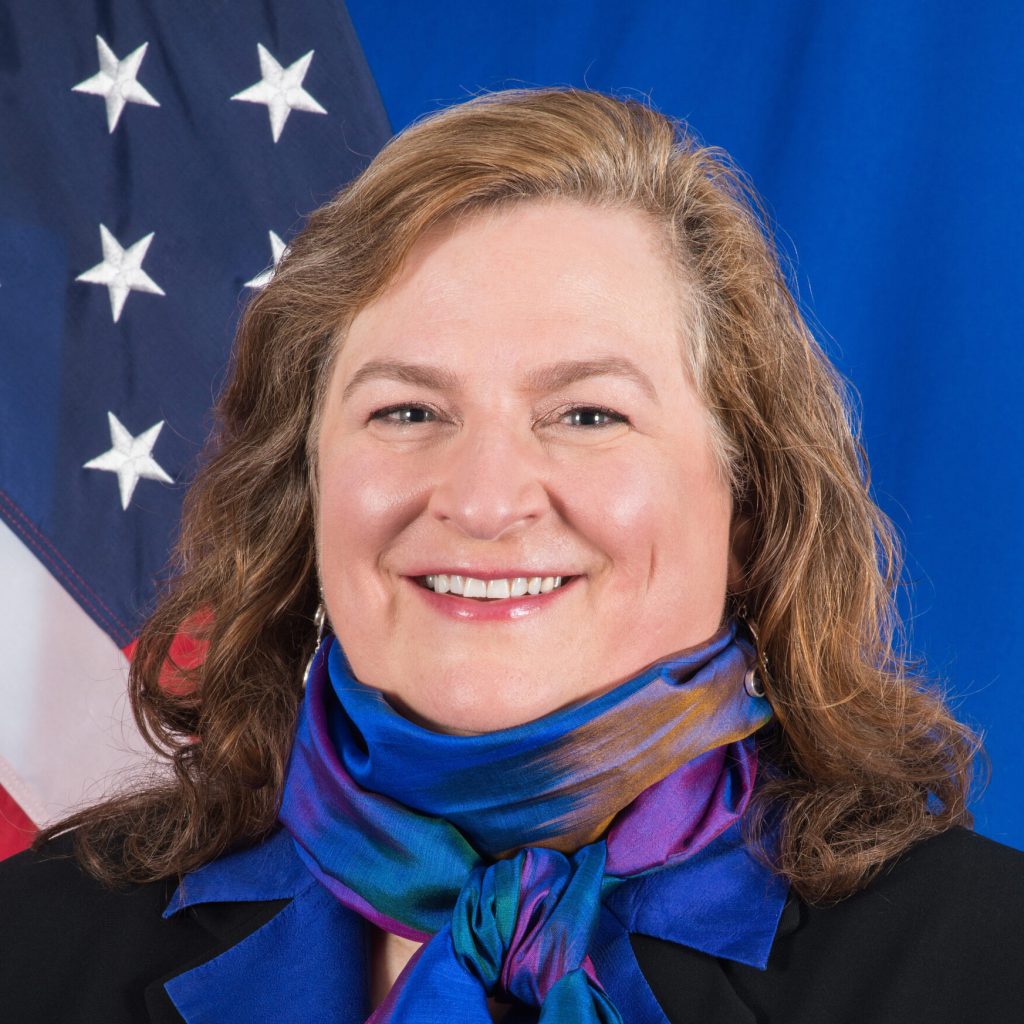
Dr. Kari Johnstone
Dr. Kari Johnstone is the OSCE Special Representative and Co-ordinator for Combating Trafficking in Human Beings, representing the Organization for Security and Co-operation in Europe at the political level on human trafficking issues and coordinating anti-trafficking efforts across the OSCE region. Before joining the OSCE, Dr. Johnstone spent nearly a decade (2014-2023) as Senior Official, Acting Director, and Principal Deputy Director of the U.S. Department of State’s Office to Monitor and Combat Trafficking in Persons (J/TIP), where she advised senior leadership on global trafficking policy and programming and oversaw the annual Trafficking in Persons Report. Her extensive U.S. government service also includes senior roles in the Bureau of Democracy, Human Rights, and Labor. Dr. Johnstone holds a B.A. from the University of Michigan and a Ph.D. in Political Science from the University of California, Berkeley.
Key Points
- The OSCE survey revealed a 17-fold increase in forced criminality cases over five years across the 57 member states, making it the fastest growing form of human trafficking globally.
- Forced scamming, which originated in Southeast Asia, is now being exported to other regions as criminals adopt this lucrative business model that exploits victims with brutal tactics to defraud others.
- Technology and artificial intelligence present both challenges and opportunities in combating trafficking, allowing law enforcement to process data more quickly to find victims and perpetrators while also being misused by traffickers for recruitment and exploitation.
- Financial intelligence and following the money can supplement or even replace victim testimony in prosecutions, reducing the burden on survivors and providing effective pathways to convict traffickers.
- The non-punishment principle remains woefully inadequate in practice worldwide, with victims often arrested, prosecuted, and convicted for crimes directly related to their trafficking experience, creating lifelong consequences that prevent access to housing, employment, and stability.
- The United States leads globally on criminal record relief for trafficking survivors, with 48-49 states having vacature or expungement laws and new federal legislation (Trafficking Survivor Relief Act) awaiting presidential signature, though much work remains worldwide.
- Victim assistance must be unlinked from the criminal justice process, allowing survivors to receive care and services first before deciding whether to cooperate with law enforcement, which actually increases the likelihood they will come forward and participate.
- The demographics of trafficking victims are shifting beyond stereotypes, with forced scamming targeting educated individuals with IT and language skills, while forced criminality increasingly exploits younger children, including those under age 10, for drug-related crimes and violence.
Resources
- Organization for Security and Co-operation in Europe (OSCE)
- OSCE Office of the Special Representative and Co-ordinator for Combating Trafficking in Human Beings
- Protocol to Prevent, Suppress and Punish Trafficking in Persons (UN Palermo Protocol)
- UN Global Plan of Action to Combat Trafficking in Persons
- U.S. State Department Office to Monitor and Combat Trafficking in Persons
- Trafficking in Persons Report
- Trafficking Survivors Relief Act
- Ending Human Trafficking Podcast
Transcript
[00:00:00] Kari Johnstone: victim assistance should be unlinked from the criminal justice process. That victims should be, and will be more able and willing to come forward if first they can get the help that they need.
[00:00:11] Delaney: Traffickers adapt fast, moving money victims and exploitation through digital systems most of us interact with every day. The real question is whether our institutions are adapting fast enough. If your picture of trafficking is stuck in the past. This conversation will update it. You’ll hear why forced criminality is rising, why victims can be mistaken for offenders, and how partnerships with tech and the financial sector can help identify trafficking sooner.
[00:00:40] This is about getting ahead, so protection doesn’t depend on someone risking everything to testify.
[00:00:47] I’m Delaney. I’m a student here at Vanguard University and I help produce the show. Today, Sandie talks with Dr. Kari Johnstone, the OSCE, special Representative and co-coordinator for combating trafficking in human beings. She previously served in senior leadership at the US State Department’s Office to monitor and combat trafficking in persons, and now here’s their conversation.
[00:01:10]
[00:01:16] Sandie Morgan: Dr. Kari Johnstone, it is a delight to see you again. We were at the UN recently together, and I am just thrilled that you accepted this invitation to be on the ending Human Trafficking podcast.
[00:01:32] Kari Johnstone: Well, thank you so much, for the invitation, professor Morgan, it’s great to see you and I look forward to continuing our conversation as well.
[00:01:39] Sandie Morgan: So tell me about your experience during the assessment at the UN on our progress in ending human trafficking.
[00:01:52] Kari Johnstone: Yeah. Thank you for that question and it was great, to meet you there. So this is a meeting that takes place every four years within the UN to assess the global plan of action on human trafficking. Which are commitments that UN member states took to combat trafficking and they come together every four years.
[00:02:11] So to take stock, this was the first time that I had participated in my current role as the OSCE Special Representative and coordinator, but I had gone previously, I think twice for the US State Department with the US delegation. so it was a different experience for me this time. and, it was a good opportunity to see friends and colleagues, in this space, both in government and NGOs and other international organizations as well.
[00:02:38] And I think there were some highlights of the assessment one is, for me particularly exciting that I think there is progress in elevating survivor leaders or lived experience experts, in these efforts. And the speaker who really brought the house down on that was a survivor leader from the US.
[00:03:00] so that was really exciting to see that. I think we’re, at least the international community is now starting to understand even more how much we can learn from those that have experienced human trafficking, both what works and what doesn’t. I think it’s also sobering to take stock, internationally at the global level as this meeting did of where we still need to improve our efforts, and the ways in which criminals continue to adapt, and the challenge for all of us to at least keep up with them, if not get ahead of them.
[00:03:33] So it was mixed.
[00:03:34] Sandie Morgan: That’s, that’s such an important point, the idea that we at least keep up with them or get ahead of them. And one of my frustrations, and maybe we can talk about this later, but is that many of our trainings you’ve seen PowerPoints, I go back and look at my old PowerPoints. They’re not relevant now because the criminal enterprise has changed the way they do things, so we have to adapt as well.
[00:04:05] Kari Johnstone: Absolutely, and I think the game changer in that is technology that we have seen. It’s not new that criminals and traffickers misuse technology to find and exploit their victims. Increasingly, they’re using technology for the exploitation itself, in terms of online sexual exploitation, as well as forced scamming, which is the fastest growing form of human trafficking.
[00:04:29] More broadly, forced criminality is the fastest growing form, but forced scamming in particular is really booming, especially originating in Southeast Asia. On the flip side of that, we have an opportunity to leverage the power of technology, including artificial intelligence, and the fight against human trafficking.
[00:04:49] And that’s one of the things that here at the OSCE we’re focused on helping both OSCE member states or its participating states and other stakeholders understand, what are those challenges with technology, the ways in which it’s misused, but also promoting better understanding and use of the positive use of technology and artificial intelligence to find the traffickers, and very importantly, find and protect victims.
[00:05:15] Sandie Morgan: Wow. And that is one of the things I loved about your words at the UN is the focus on how we use technology positive so much. Has been framed in a fear-based agenda and as I’m listening to you, OSCE I am remembering the first time I was in an international setting listening to that acronym. There are a lot of my listeners we’re in 173 countries and they don’t know what that means.
[00:05:50] Can you expand on that?
[00:05:52] Kari Johnstone: Sure I’d be very happy to. So the OSCE stands for the Organization for Security and Cooperation in Europe. Now, despite the fact that it’s called Europe in its title, it actually includes North America as well, both the US and Canada. All of Europe and the former Soviet Union and Mongolia. So it geographically it’s the largest regional security organization and it goes from Vancouver to Vladivostok and I mentioned it’s a security organization, it’s focused.
[00:06:24] Really on what we call comprehensive definition of security. That includes not only traditional hard security, political, military security, also economic security and prosperity, and what we refer to as the human dimension. That includes human rights, rule of law, and human trafficking really covers all of those dimensions.
[00:06:44] so it’s an exciting place to be working on the issue of human trafficking. It has 57 member states or participating states. And it’s primarily a political organization. We don’t have legally binding commitments, but political commitments that are made by consensus.
[00:07:00] Sandie Morgan: Wow. And how often do you meet? What does the everyday job look like?
[00:07:08] Kari Johnstone: So as an organization, the 57 participating states or member states really govern, so to speak, the organization by meeting usually weekly at the ambassador level where they can make decisions on behalf of the ministers of the member countries. For me, what that looks like in the human trafficking space.
[00:07:30] I have a team of about 20 to 22 people on any given day. And my role is to both help coordinate our efforts across the OSCE. We have 16 different field operations where we have a presence on the ground that supporting governments in fulfilling their OSCE commitments, working with other international partners, we also do a lot of programmatic work or providing technical assistance.
[00:07:56] So the work we do on any given day varies a lot based on what we’re doing that week. And I travel a lot, helping states understand how human trafficking is evolving and what they can do to better fulfill their commitments to prevent human trafficking, protect victims and hopefully hold the perpetrators accountable.
[00:08:18] Sandie Morgan: That’s a fabulous agenda to protect and to apprehend the UN. When we were there, you emphasized the importance of investing in proactive identification, and you talked about digital footprints financial flows. I think that really aligns with what you’re talking about using AI in a positive part of our new agendas.
[00:08:50] So can you explain what that looks like in practice?
[00:08:53] Kari Johnstone: Yeah, so I think in the United States and around the world in the UN and elsewhere and the OSCE, we talk about a three or a four P framework of prevention, protection, prosecution, and partnership. And to me that proactive victim identification is really central to all of those pieces working because if we don’t find a way to make it safe for victims to declare usually the most traumatic and horrible experience of their lives, and give them something that incentivizes them, that they feel not only safe, but that they’re gonna get some benefit from coming forward and sharing what has usually been such a horrible experience.
[00:09:36] So not only identifying them, but then having some protection in place. And when victims do get the help that they need and the protection, the rights that are afforded to them under international law and almost all states laws, they’re more willing and able to help law enforcement investigate and hopefully prosecute effectively their traffickers as well.
[00:10:02] And they can also let us know what’s working on prevention. And there, I think, to some of the specifics of your question, we can really work with technology companies, the financial industry on the private sector side, not only with governments and civil society also, which play a hugely important role.
[00:10:20] And first and foremost, I wanna be clear, governments have responsibilities. The pool of stakeholders that have a role to play in combating human trafficking and finding and protecting victims is very broad and I think ever growing. But at the end of the day, governments are the ones that have responsibilities to protect their citizens and others that are on their territory and find the perpetrator.
[00:10:44] So some of the tools that we focus on, as you mentioned, in that front, are both the use of technology, the financial flows. So we, part of what we do is help foster partnerships between financial sector and the private sector. So banks, money transfer institutions, help connect the dots between them and financial intelligence and investigators and those that are looking into human trafficking crimes, often they work in silos.
[00:11:15] So one of the things that we do is help both countries and private sector institutions like banks and financial institutions understand what to look for. What are the indicators potentially of the financial transactions that they already have to report on? In terms of terrorism related suspicious activity, what are the signs that it could be human trafficking that they’re seeing in those financial indicators?
[00:11:39] And then how do they share that information with law enforcement and financial intelligence so that they can go after the money? And this is not only really effective way to go after traffickers, but it also, it reduces the burden on victims. Because so often we are relying on victim testimony to identify and prosecute the traffickers.
[00:12:02] And this is, we find that the financial flows and financial intelligence can really supplement or even replace if a victim is not available or doesn’t wanna testify.
[00:12:14] Sandie Morgan: Well, and that’s such an important understanding for people that this idea, and you use the word, incentivize the victims to come forward when their process for being able to be quote unquote rescued involves that they have to initially, before they have any assurances, they have to agree to work with law enforcement.
[00:12:45] In the prosecution side is in some form or other very common across many countries. So this agenda, it’s hard to roll it back and make it more trauma informed, more victim centered, and how are you using these tools to change that element?
[00:13:10] Kari Johnstone: So you are absolutely right that so often in order for a victim or a survivor to get access to any services or rights they have to agree to cooperate with the police or other law enforcement. We advocate from the OSCE perspective that victim assistance should be unlinked from the criminal justice process that victims should be and will be more able and willing to come forward if first they can get the help that they need.
[00:13:42] And then they have the time to decide if they want to collaborate with law enforcement. And there may be reasons for their own safety, their friends or loved ones that they’re worried about being retaliated against if they work with law enforcement.
[00:13:55] So there are a lot of reasons that a victim may decide they don’t wanna work with law enforcement, but they should have the choice to do that and still get the services and the care and the rights that they deserve and that they’re entitled to.
[00:14:07] So part of what we do is just political advocacy, that we make that point and help explain through research and data that governments will be more effective in identifying victims. They’re more likely to come forward and they will then be more able and more willing and probably better equipped to support the criminal justice process once they get some care first.
[00:14:29] Right?
[00:14:30] Sandie Morgan: Yeah, and it’s, it’s flipped in reality on the ground and it’s because it’s, and we experienced this in the US too. We had, we were teaching in best practice not to label our survivors as victims. And yet so much of the regulations, the laws were attached to that language. And it takes a while for the language and the research to show up in legislation, and that’s why when you mentioned policy earlier, I am talking to my friends, my colleagues in education, in social services, in faith communities, about how do we begin to update our bureaucracy, our legislation on our policies and policy hasn’t typically been a part of the three or four Ps, and so I’m a huge advocate for number five is P for policy.
[00:15:42] Kari Johnstone: I think that’s a very good point and really central to all that we do. Here at the OSCE, we have political commitments that are very much aligned with global international commitments under the UN Palermo Protocol and under and US law to be clear. And one of the things that we do is not only advocate for policy changes, but provide assistance to do that, including working with members of Parliament, providing legal review in some cases.
[00:16:13] And this area that we’re talking about specifically in terms of victim identification and assistance and delinking that from the criminal justice process is one of the areas that we use all of these tools, we refer to it here in the OSCE as the social path. I think it’s pretty consistent with US practice the idea that everyone who might come in contact with a trafficking victim or survivor is equipped with knowledge of what to look for, what signs they might see, and then that they know what to do, how to refer that person to care and make sure that they can get the rights that they need. And we do that through workshops, training and technical assistance, but also through legal review and working with Parliaments in the cases of where they need to actually revise laws in order to implement this social path approach.
[00:17:04] Sandie Morgan: So I’m going to highlight that social path approach as something we have to have further conversation about. But one of the other things that you highlighted in the conversation at the UN was the non punishment principle, and particularly for victims exploited into criminality. So from a global policy perspective, why is this principle so difficult to implement?
[00:17:41] And if we don’t, what are the consequences?
[00:17:46] Kari Johnstone: Thank you for this question. This is an issue that is very near and dear to my heart, and I think is one of the biggest challenges globally right now in the anti-trafficking field. The non punishment principle has been enshrined in international law and in many states law, states with a capital S, countries around the world, and states within the United States.
[00:18:07] so in many places it is legally binding. It is certainly a principle that is widely accepted, but its application and practice has been woefully inadequate everywhere. And the consequence is that victims and survivors, and I’ll come back to that point also about the term. I take your point that in the US and among the survivor community I think there’s a strong preference among some to move away from the term victim. It is a legal term in most states, including within OSCE commitments and framework. So it is the term that I use more often, but I very much recognize that many prefer the term survivor and many survivors now prefer the term lived experience expert.
[00:18:52] So I actually use all of these terms as I appreciate the value and the perspective of those that have lived through this. And their right to decide what they would like to be called as much as possible. Having said that, when such people who have been exploited by criminals and human traffickers are not identified, but instead are punished, first of all, it completely goes against what I said before about trying to make it safer and incentivize victims to be able to come forward. Instead they’re punished and we are not fulfilling our commitments and our duty of care to the individuals, whether they’re citizens or not in our societies. If we are punishing victims of human trafficking, many ways in which they’re punished, it might be deportation.
[00:19:42] Often they are arrested and maybe prosecuted and even convicted for criminal acts directly related to their trafficking experience. That conviction when they’re convicted also has an influence negatively on survivors, often for the rest of their lives. Every time they apply for a job or try to rent an apartment or buy a house. Not to mention all of the other consequences that may come with that in terms of trauma and physical and mental health effects. So the consequences are huge and it comes at a cost to society that we are spending money on prosecuting, convicting, and in some cases then holding in detention or jails.
[00:20:26] Or deporting people who are themselves, the victims, rather than using our resources to actually go after the true criminals in these circumstances. So it’s a loss not only for victims and survivors, but very much for our societies and our economies even.
[00:20:43] Sandie Morgan: Well, and is that same, like we have several initiatives here in the US for vacature and helping victims now survivors with lived experience, getting all those terms in the same sentence. Is that happening across the 57 member states of OSCE?
[00:21:12] Kari Johnstone: It is not. And this is again, a personal priority for me, and it’s an area where the US is really leading. I know many survivors and other advocates in this space that are disappointed that the US has not done more. And even that the trafficking Survivor Relief Act that was just passed by Congress doesn’t necessarily bring all of the relief or include all of the criminal acts that some people would like.
[00:21:41] The US is light years ahead of other OSCE member states on this issue of criminal record relief, whether that’s vacature, expungement, or other forms of criminal record relief. So part of my goal right now is that we leverage the progress that the US is making in this area, and I think it’s now 48 or 49 states at the state level that have some kind of vacature or expungement law for trafficking victims and survivors.
[00:22:08] And now we have a national law that is still awaiting the President’s signature that is more than any other OSCE state. I believe even beyond the OSCE region. So we need to build more momentum in this area because I think that’s one of the most concrete things that we can do when we’re not succeeding in applying the non punishment principle, we can at least right the wrongs and improve tangibly the lives of those that have been exploited by traffickers.
[00:22:37] Sandie Morgan: Okay, so I could talk to you for hours. So let’s go back a little bit to the gaps because this is a major gap. We need to move forward. Are there other gaps in our global commitment and the realities that practitioners and survivors are facing. The forced criminality is exploding, particularly in Southeast Asia with the fraud centers.
[00:23:12] And how are we as a community going to bridge those gaps?
[00:23:18] Kari Johnstone: That’s such a great question and one that we think about a lot. ‘Cause we, within the OSCE, since we don’t have legally binding commitments, we really see our role as trying to help lead the international community, or at least the international organizations and hopefully our member states as well in understanding what are the current trends, where are the gaps? And then what do we do about them? Providing some concrete tools. So on the issue of forced criminality, as you mentioned, it is the fastest growing form of human trafficking globally. And also within the OSCE region. We do a survey every five years. In just in 2025, we collected information from OSCE participating states.
[00:23:58] 55 of them responded, and we saw a 17 fold increase over five
[00:24:04] Sandie Morgan: Whoa.
[00:24:05] Kari Johnstone: In the cases detected and reported to us of forced criminality in the OSCE region, and even forced scamming, which has come up a couple times. And you just mentioned Southeast Asia. That’s really where this form of forced criminality originated and started booming.
[00:24:23] We know that that methodology, the business model, so to speak, to put it, crassly has been so lucrative that criminals are now exporting it beyond Southeast Asia, and we have seen cases of the actual forced scamming itself where people are compelled usually with very brutal tactics to defraud other people.
[00:24:45] And we are doing some research right now that we’ll have out by April of this year to understand where forced scamming is happening in the OSCE region, places like Europe, Central Asia, the Caucasus. So we’ll have more data to understand where that’s actually happening. Drug related forced criminality also is growing across the OSCE region. That’s true in the US and Canada as well as across Europe and children, younger and younger are being compelled to engage in these crimes, whether cultivation, transportation, distribution of illicit drugs and other criminal acts.
[00:25:24] There are growing trends especially in northern Europe of increasingly younger and younger kids, like under the age of 10 being compelled to engage in either illegal drug related activity, other crime related violence planting bombs. So we know it’s growing so fast and we really need to provide some tools.
[00:25:47] So this year, our big event, every year we host a high level conference of alliance called the Alliance Against Human Trafficking, and this year it will be here as it always is in Vienna, April 20th and 21st with a focus on forced criminality. And our goal is not only to raise awareness so that we all know what to look for, but also to come armed with some tools to help all of us better identify the problem.
[00:26:13] And one of the key gaps we’ve touched on already throughout this conversation, but specifically in the area of forced criminality is it’s getting harder and harder to identify victims of forced criminality when the crimes that they are being compelled to commit are getting more and more serious.
[00:26:31] So when a police officer, an immigration officer, or anyone else encounters someone that is engaged in more and more serious crimes to stop and think that they might be a trafficking victim rather than just arresting and prosecuting them is getting harder. So we will not only bring some research, we also, in addition to forced scamming research, we will have research on drugs and human trafficking.
[00:26:55] And I’m particularly excited that we will have survivor informed indicators to help with identifying victims of forced criminality as well, that we’ll be releasing at this conference.
[00:27:05] Sandie Morgan: So are these surveys and tools and things you’re mentioning available online for everyday people?
[00:27:13] Kari Johnstone: They will be, most of the ones that I just mentioned will be coming out over the next few months. The survey, we expect to publish in March and then at the conference in April, we’ll have the publications on drugs and forced scamming in the OSCE region as well as survivor informed indicators for identifying victims of forced criminality.
[00:27:37] Sandie Morgan: So this focus on identifying victims, I think somehow we need to shift our thinking from this is a sweet little girl who’s been thrown into a van. Can you speak to what I should be looking for instead?
[00:27:56] Kari Johnstone: So I think what we’ve seen over the years is almost anyone could be a trafficking victim. The perfect victim or the stereotypical victim of a young girl coerced into sex trafficking. Certainly that still happens, but the demographics are shifting, forced scamming is really changing.
[00:28:15] The demographics we’re seeing more and more men and boys and often educated with IT skills, language skills specifically for forced scamming, in forced labor. Obviously we’ve seen more and more men and boys, I think with online sexual exploitation and even sex extortion that in and of itself may not be trafficking, but is increasingly being used by criminals to lure people into trafficking.
[00:28:42] That’s also luring boys into drug related gang related activity. So unfortunately, almost anyone at this point could become a trafficking victim.
[00:28:53] Sandie Morgan: Oh, it’s overwhelming. But what gives you hope that systems, because OSCE is about systems strengthening those, what gives you hope that we can better align our efforts?
[00:29:11] Kari Johnstone: I would say three things. The first, we’ve talked a lot about technology. I think there’s tremendous potential to use technology including AI and large language models that we can quickly and law enforcement can quickly process data to hopefully find more victims and the perpetrators and to really help us be more efficient with the tools and resources that we do have.
[00:29:35] Secondly, financial flow. We will have another publication coming out also in the first half of 2026 on follow the money part two with a focus on cryptocurrencies. And I’m really hopeful that as we get better at using financial investigations and intelligence to not only find the perpetrators, but convict them, that there’s real promise on the law enforcement side that we’ll also bring relief for so many victim survivors of human trafficking.
[00:30:08] Which brings you to my third point. I am really inspired by the number of survivor leaders and lived experience experts that are putting their time intelligence and own horrible experiences to inform really fantastic leadership and meaningful work in this space so that we can understand what’s not working, why it’s failed in the past, and be much more targeted and hopefully effective in our efforts going forward.
[00:30:42] Sandie Morgan: Dr. Kari Johnstone, I am your follower. I want to learn what you’re learning right there on the front line, and I insist that you come back on the podcast after the April because you’ll have so much more to share with us. Thank you so much.
[00:31:07] Kari Johnstone: Thank you so much. This has been a great conversation. I look forward to continuing it.
[00:31:11] Delaney: A big thank you to Dr. Kari Johnstone for reminding us that traffickers are adapting fast, especially through technology, and that we can’t rely on old assumptions about what trafficking looks like. Listeners, if you loved this conversation, make sure to check out our website at endinghumantrafficking.org for tons of in-depth show notes and other resources. If you’d love to help us grow this podcast, you can start by sharing this episode with someone and connecting with us on Facebook, Instagram, or LinkedIn.
[00:31:39] And as always, thank you for listening.
