Chris Simonsen joins Dr. Sandie Morgan as they explore how communities can close the gap that makes young people vulnerable to trafficking—not with rescue mentalities, but with trauma-informed care, consistent relationships, and spaces where young people feel safe enough to stay.
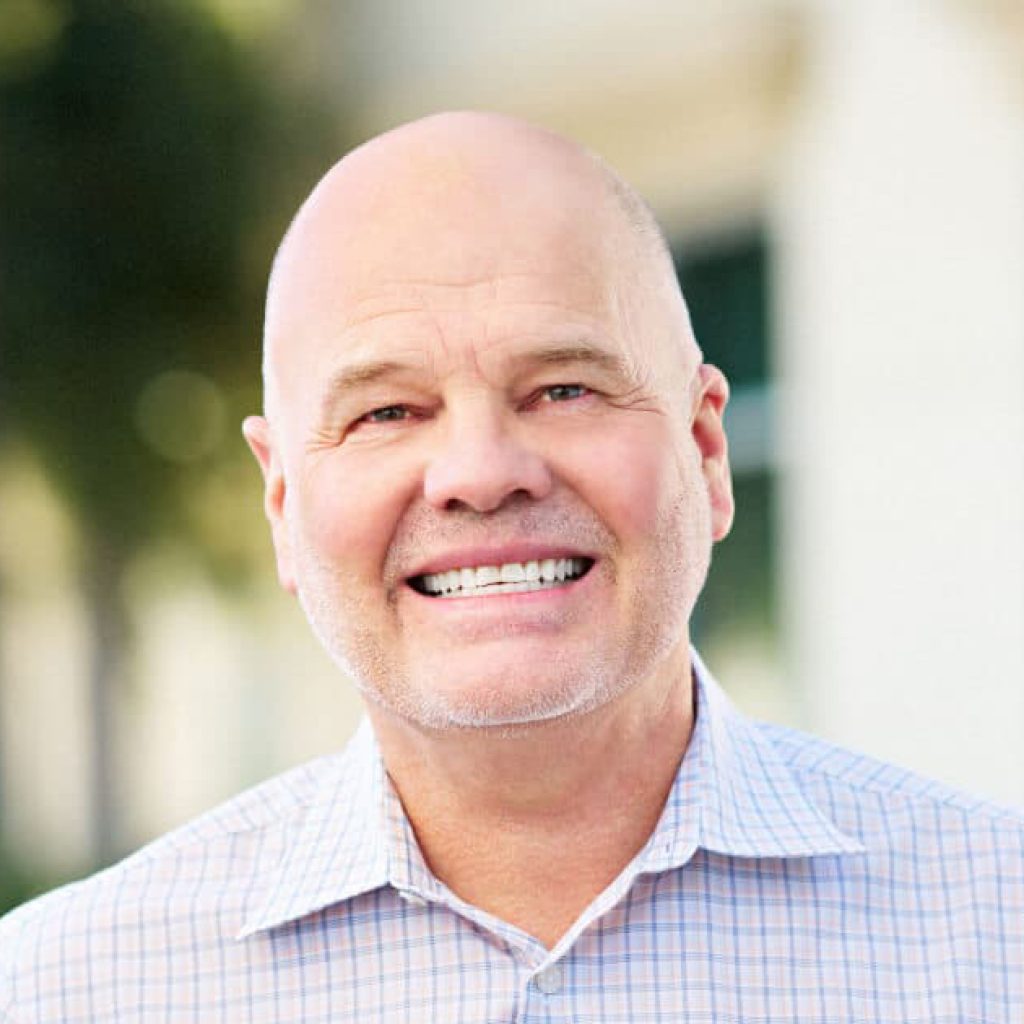
Chris Simonsen
Chris Simonsen is the Chief Executive Officer of Orangewood Foundation, one of Orange County’s leading organizations serving youth who have experienced abuse, neglect, homelessness, and exploitation. With more than fifteen years at the helm and over three decades of executive leadership experience, Simonsen oversees a comprehensive continuum of care that includes housing, education, transitional support, wellness services, and specialized programs for youth who have been exploited or trafficked. Under his leadership, Orangewood has expanded its focus on intervention for children and Transitional Age Youth (TAY), emphasizing strategies that prevent revictimization, stabilize immediate crises, and strengthen long-term resilience. Simonsen’s leadership is shaped by a commitment to relationship-based, trauma-informed care and a theory of change rooted in the belief that consistent adult support, safe environments, and practical resources dramatically alter a young person’s trajectory.
Key Points
- Orangewood Foundation made a strategic decision ten years ago to remove all labeling criteria for their programs, allowing them to serve any teen or young adult in need regardless of foster care status or county of residence, which caused the organization to grow from 40 to 250 employees.
- The number one priority when working with vulnerable youth is building a trusting relationship and creating a safe environment where they feel comfortable, which can take weeks or months before meaningful goal-setting work can begin.
- Young people without support structures are highly vulnerable to traffickers, and their trauma is so much more complex that Orangewood created dedicated programming including the Lighthouse transitional housing program and Project Choice drop-in center specifically for survivors and at-risk youth.
- Prevention work must address the developmental realities of youth who haven’t had long-term stability or supportive infrastructure, including implementing social-emotional support in schools through programs like advisory groups that stay together for four years.
- The role of loneliness and connection is critical—young people need to build their own communities and peer support networks, not just rely on organizational staff, to develop healthy relationships and long-term resilience.
- For those wanting to help, the most effective approach is to support existing trauma-informed organizations through volunteering, donations, or collaboration rather than starting new nonprofits, and to get educated on what human trafficking really is before attempting direct intervention.
- Schools need to dedicate more resources to the social-emotional aspects of teenagers’ lives, not just academics, and provide direct education to students about trafficking prevention at appropriate age levels without parental pushback.
- The Ending Human Trafficking Collaborative led by the Samueli Foundation exemplifies how community education and cross-sector partnerships can strengthen prevention efforts by bringing together experts and philanthropists to direct resources where they’re most needed.
Resources
- Orangewood Foundation
- Samueli Academy
- Project Choice (Orangewood Foundation)
- Lighthouse Transitional Housing Program (Orangewood Foundation)
- Ending Human Trafficking Podcast
- Global Center for Women and Justice – Vanguard University
- Orange County Human Trafficking Task Force
- Samueli Foundation
Transcript
[00:00:00] Chris Simonsen: The number one thing we have to do initially with any of our young people is build a trusting relationship with them.
[00:00:07] Make them feel comfortable.
[00:00:09] Delaney: When young adults don’t have safe housing, trusted adults, or a sense of belonging, prevention fails and traffickers step in to fill that gap. This episode explores how communities can close the gap, not with rescue mentalities, but with trauma-informed care, consistent relationships and spaces where young people feel safe enough to stay.
[00:00:30] You’ll hear why prevention often starts long before exploitation is visible, and how schools, nonprofits, and everyday adults can be a part of the solution. Hi, I’m Delaney. I’m a student here at Vanguard University and I help produce this show. Today, Sandie talks with Chris Simonsen, CEO of Orangewood Foundation about how supporting transitional age youth and building community-based responses can reduce vulnerability to trafficking.
[00:00:57] And now here’s their conversation.
[00:01:06] Sandie Morgan: Chris, I am so grateful to have you on the Ending Human Trafficking Podcast. Welcome.
[00:01:12] Chris Simonsen: Happy to join you, Sandie. It’s nice to be here.
[00:01:16] Sandie Morgan: We have known each other a pretty long time, and I think one of the highlights in my career was when Orangewood and you in particular, gave me the Crystal Vision Award and I just want to do a thankful shout out for what that meant. So many of us have worked in this space for a long time, and we often do not stop to reflect on our achievements.
[00:01:50] I have the feeling we need to find a way to give you that award.
[00:01:56] Chris Simonsen: Well, who knows? Maybe that’ll happen someday after I’m retired.
[00:02:00] Sandie Morgan: Oh, okay. Well we can’t let that happen too soon. So, let’s provide some context because we know each other well, but for our listeners here, what is the mission of Orangewood?
[00:02:16] Chris Simonsen: Yeah, so Orangewood Foundation has been around actually 45 years, this year. And it started out with just one project, which was to collaborate with the county of Orange to build an emergency shelter for foster youth. At the time they had a facility, but it intermingled foster youth that were there on an emergency basis with probation youth.
[00:02:41] And so it was quite confusing for these young children that were removed from their homes on a temporary basis to be mixed in with these other children that had committed crimes. So the director at the time, Bill Steiner, went to the county and said I’d like to create a separate facility to house these children that have been removed from their homes until we can find them a suitable placement.
[00:03:07] So the county had a piece of land, but they didn’t have any funds to build the facility, so that’s when General William Lyon, who founded our organization, got involved and rallied the community to raise $8 million. And five years later they opened up the Orangewood Children’s Home and turned that over to the county to operate and run.
[00:03:30] And they’ve been doing that ever since for the last 40 years. So then our board asked themselves, well, what more could we do? We’ve got all this momentum in the community and awareness around the challenges of foster care and child abuse that’s going on in the county. So they decided to start creating other programs.
[00:03:52] And so we’ve been doing that over the last 40 years. We started with a scholarship program for former foster youth that wanna pursue higher education. And that’s a significant program because only about 60% of foster youth graduate high school and only about 20% attempt college and only about six to 8% finish college.
[00:04:13] So one of the barriers for them finishing college is financial. So we try to assist them so that some of the things that maybe parents would provide a young adult as they’re going to college is something that we can provide them. And then we just continued to build on that. We created some transitional housing programs.
[00:04:32] We run the county’s independent living program for teens in foster care. And when we moved to our new facility in 2003, we created a drop-in center for young adults that are struggling with homelessness or have any other needs. And that program has really grown and expanded to the point where we are serving over 1200 young adults in our drop-in center this year.
[00:04:56] And about 10 or so years ago, we made a strategic decision to remove all the labeling of our young people. We had a lot of internal criteria of how young people could qualify for our programs. A lot of it around having been in foster care in Orange County, and that just really was not inclusive and we were turning away young people that really needed help.
[00:05:21] So we did away with all of that criteria. And so today we just serve any teen or young adult in need. It doesn’t matter if they’re from Orange County or somewhere else in the state or even out of state. We’ve got a lot of resources to assist them and we want to be there for them. So that was a pretty fundamental shift for us, but I think a really smart and good one, and that has caused us to grow as an organization.
[00:05:48] I’ve been with Orangewood 18 years now, six years as the Chief Financial Officer, and now 12 years as the CEO. And we had 40 employees when I started back in 2007, and now we have 250 employees between Orangewood Foundation and our charter school, Samueli Academy. So we’ve grown a lot, but more importantly, our impact has grown a lot.
[00:06:11] Our programming and our resources to help young people has expanded dramatically. And that includes creating some specific programming around young people that are survivors of human trafficking or at risk of being trapped into that world. And so we were seeing young people coming to our programs, many of them from foster care that had been trafficked or were being trafficked because as you know, Sandie, young people without a support structure around them are highly vulnerable to traffickers.
[00:06:47] So we tried to meet their needs in our Orangewood programming that we had at the time, but we quickly realized their trauma is so much more complex and their situations are more complicated, that we really needed to have dedicated programming to properly support them. So we created our Lighthouse transitional housing program for survivors of human trafficking, and that’s been in place since 2016.
[00:07:17] And then more recently, about five or so years ago, six years ago, we opened up a separate dedicated drop-in center called Project Choice, and that is specifically there to support young people, ages 11 to 21, that are at risk of falling into the life of being trafficked or are currently being trafficked or survivors of trafficking and surrounding them with support and services to help them avoid that life or get removed from that life or create their own life as they go forward.
[00:07:54] Sandie Morgan: So I’ve been along for the ride from almost the beginning of any of the anti-trafficking work and prevention, early intervention. So many questions are popping into my mind, but the principles that I want listeners to take away from this starts with what you said about taking away the labels and what we know recently right here in Orange County as a case study, our latest human trafficking task force report showed a full 50% of victims were minors.
[00:08:42] I don’t like using the word minor. It dehumanizes and makes this a number game. But children and how we make the artificial cutoff for when you’re a child and when you’re an adult, really changes when you expand the age range to include transitional age youth. And so I’m curious with the understanding you’ve gained by removing labels, how do you see your interventions as redirecting.
[00:09:24] It’s the whole issue we have in prevention is once they don’t go down that path, we don’t have a way of following up. We don’t know how many preventions, we only know how many actual victims. So can you address that early intervention and your strategies for preventing victimization or even revictimization.
[00:09:55] Chris Simonsen: Sure. Yeah. One of the things that is required under our contract for Project Choice is to do community education and outreach. And so we do a lot of work with schools, in particular, their teachers and staff, to just get them more educated about what human trafficking is and what to look out for and signs that they might see in their students.
[00:10:23] We are hoping to do more direct education for students where appropriate at the right age levels so that with all the social media avenues that they have to interact with people. As you know, Sandie, it’s much easier to have conversations with people that you don’t know because they’re behind a screen that can lead to disastrous results.
[00:10:50] So we also run the county’s independent living program for teens in foster care. And so we hold workshops monthly on a variety of topics. But some of the topics that we focus on are directly related to prevention of human trafficking. How to behave, how to dress, how to act. Don’t over sexualize yourself the way you dress or act.
[00:11:18] Those could send out the wrong signals. Healthy relationships, all of those things that when the education of the children in those areas don’t exist, they can easily be entrapped into a very damaging and awful relationship as we see when they come into our Project Choice drop-in center.
[00:11:42] And they may be currently being trafficked and they are underage and that’s just horrible for us to see. And we wanna, our goal is to really put Project Choice out of business, right? We don’t wanna have to have a drop-in center for young people that are victims of these crimes.
[00:12:05] So that’s our major focus there, really. And I think in talking about labeling too, I think it’s important and you know this obviously extremely well, but I think we’ve made a lot of progress in moving away from terms that were used in the past, like, oh, prostitution and things like that, and more towards victims and survivors.
[00:12:32] And I think in changing that language, it’s helped the general public be more open to learning and understanding about this issue, how it’s impacting their community, and ways that they can get involved to help with the services and programs that are in that area. So before it was looked at as a crime and now I think we’re making good progress with the help of you and others to change the lens that people in the general community are viewing these situations.
[00:13:12] Sandie Morgan: Well, and you’ve referred to some of the developmental realities of the kids that you see, and because of their gaps. Often they haven’t had the long-term stability. They haven’t had stable housing, for instance, they may have moved from school to school, and they just don’t have the supportive infrastructure around them.
[00:13:43] So when they come to the drop-in center, how do you design services that make them come back over and over again in order to take advantage of those services?
[00:14:01] Chris Simonsen: Yeah, I think the key for us is creating a safe environment for them. One where they can be themselves. We’re not gonna be judging them, and we don’t need to get to work right away when they come to see us. The number one thing we have to do initially with any of our young people is build a trusting relationship with them.
[00:14:25] Make them feel comfortable. A lot of them, like you said, they had such instability in their childhoods and teenage years. They don’t know what trusting healthy relationships are. They’ve had a lot of adults abandon them or have had other adults making decisions about their life.
[00:14:46] Where they go to school, where their placement’s gonna be, who they’re gonna live with, that they really just have a general distrust for adults, and so our goal is to get them to feel comfortable with us, and that doesn’t happen overnight. Sometimes it could take weeks or months, but eventually when they feel safe and secure, then we can start working with them on their goals.
[00:15:12] It’s not what Orangewood Foundation thinks is best for them. Of course we’re gonna offer our opinions and guidance like any parent would do for their child, for example. But we wanna know what is it that you need from us? How can we help you? How can we walk alongside you?
[00:15:31] And if we can start with some small goals first, creating safety plans, for example, or trying to identify are there any consistent adults that have been in your life? And it might not be family members, it might be a coach or a teacher or someone, somebody that, some relationships that you can latch onto, that you can start building a social network of your own in the adult community that can help you.
[00:15:59] And so for some people, unfortunately, there aren’t people like that and they rely heavily on our team and our staff. But our goal is to get those relationships developed because they can’t obviously rely on our organization for their entire life. They need to build a life of their own with a support network that can be there for them.
[00:16:23] Sandie Morgan: Starting with that foundation of a safe space. I think too often, wonderfully well-intentioned people start with, okay, I’m gonna teach you financial literacy, and good decision making, all of this, and the young person is just thinking what will be my quickest exit if this all goes wrong? And as I’ve worked with survivors over the years and we do a Survivor Gap scholarship, and when I’ve had a student sitting in my office trying to explain why she could not do her homework because she had lost her housing and was now in a homeless shelter where she was concerned because of the open sleeping arrangement and could not focus.
[00:17:14] So we get things out of order. We all need to go back to our first year freshman psych class and look at Maslow’s hierarchy and that safety foundation and being accepted and feeling safe gives us a foundation for more long-term outcomes.
[00:17:43] I wanna ask about how you particularly, because I’ve heard you speak passionately on this, and one statement I wrote down years ago, and it’s come up in other conversations was the role of loneliness and connection, and can you explain where that comes from and why you’re so passionate about being the answer?
[00:18:15] Chris Simonsen: Well, I think personally because I am such an outgoing, extroverted person and love meeting people and building relationships, it just really pains me when I see young people coming to our drop-in center, for example, that have nobody, they have no meaningful relationships and they just feel like they’re fighting this battle by themselves.
[00:18:39] And everybody needs to have a community. And I think that’s one of the things that Project Choice and our general drop-in center do is it shows these young people that, hey, I’m not alone. There’s other people that are facing the same struggles as I am. And there’s a lot of peer support, not just in saying, hey, I’ve been here for a while.
[00:19:03] I’ve been working with Orangewood Foundation. They have the right approach. They have their hearts are in the right place. Just give it some time. That’s important. But if they can also develop a community within their peers just for support and getting through some of the struggles they might have, whether it’s schooling or jobs, et cetera.
[00:19:25] That’s just so important, and that’s why our Lighthouse Transitional Housing program has seen a lot of success because we have a group of young people living under one roof. And they don’t live in isolation. They build their own community. They do things together and when you’ve been in situations that are unhealthy relationships, whether that’s growing up in foster care or being trafficked, to actually then be put into a situation where you can build healthy relationships.
[00:19:58] It’s a little foreign to them at first, but then they see the value in having friends, having peers, having a support group that they can relate to, they can talk to that have walked in their shoes. And so that’s a big part of what we do. Once we get them comfortable, like I said, we wanna try to help them build that network and we can be part of that, but we can’t be the exclusive members of that community for them.
[00:20:28] And it’s just so important to have people that you can trust and talk to. And unfortunately for these young people that have been trafficked or coming out of trafficking, so many people have told them what to do for so many years. They haven’t made a lot of their own decisions over the time.
[00:20:53] So even just who to pick to associate with and get to know, it can be scary for them ’cause their trust has been violated so many times. And yeah, so it’s just something that we really focus a lot on as our first step. Like you said, you don’t wanna get things out of order.
[00:21:13] If you start pushing someone to try to accomplish these tasks before they’re ready or even get to know you as a person or an organization, they’re just gonna say, oh, this is just like any other place that I’ve been to and trying to tell me what to do. They don’t listen to me. I mean, really, for us, it all starts with what’s best for the youth and what does the youth want.
[00:21:39] Sandie Morgan: So they’re empowered to create their own community there. When you said the word safe community, it reminded me of a project our Vanguard students are doing now that’s called Safe Community, Safe Kids, and people often listen to that nice, catchy title and think we’re putting together teams of adults to be around the kids.
[00:22:04] We’re not, we’re equipping young people, middle schoolers, high schoolers, to create their own safe community. They’re the ones who understand the pressures that they experience in their social setting, they share with each other their challenges, perhaps in a home environment or in another situation.
[00:22:30] And they have similar experiences and they can lean on each other. And Project Choice creates. I did some evaluation work years ago that included Project Choice and one of the most memorable conversations that I had, Chris, and I probably should have told you because it’s such a great story. When I had to do a focus group online, because we couldn’t do it in person, the kids who showed up surprised everybody because they were so eager, they were lonely, and now we had a space.
[00:23:14] To meet and a reason because they were participating in a focus group and their concerns and support for each other were visible. I remember one student saying to another, so are you still doing your community college classes? So they were better than the adults around them, who sometimes we come off with a checklist mentality, oh, these are the things I need for this kid, so I’m checking ’em off here.
[00:23:49] And that isn’t the same feeling that you get when you’re part of a community like the kids really were in that Project Choice group.
[00:24:03] Chris Simonsen: Yeah, we really emphasize a lot of group discussion and I don’t wanna call it group therapy, but just workshops and getting the young people together instead of working with them individually all the time, there’s a lot of power in being in the same room with your peers and hearing everyone else share.
[00:24:27] And not only are they getting to hear from them, but they’re demonstrating, hey, I’m willing to share ’cause this is a safe place. So if you don’t feel embarrassed or don’t feel like you can’t share, if you’re having a struggle that you wanna talk about, and we, Project Choice has every month we’ve got drumming circles or art therapy or equine therapy, or just going out hiking things that
[00:24:54] Sandie Morgan: I’ve been there when they’re all in the kitchen cooking.
[00:24:57] Chris Simonsen: Right?
[00:24:58] Sandie Morgan: Yeah, it’s so like, I feel like I belong.
[00:25:01] So here’s the thing. The people out there listening to this may not have the resources that Orangewood has because you’ve spent 45 years building this very comprehensive approach.
[00:25:17] So what are the two or three things that must happen for a group that wants to be available and do good work that is also best practice oriented that is going to support the most, the youth who are the most at risk.
[00:25:38] Chris Simonsen: Yeah, I think what you just said there is the key. There’s a lot of people out there that wanna rescue survivors and they don’t take a trauma informed approach to the work that they’re doing, and that can cause more harm than good. And so if you’re really, truly interested in having an impact in this area, I would suggest finding an organization that is doing work already and seeing how you can support them.
[00:26:11] Frankly, we have too many nonprofits in this country and a lot of ’em are very small and inefficient, and people have good hearts and they mean well. But if we could combine forces and collaborate more, the impact can be much greater. And so now if that’s not something that somebody wants to do and they really want to do it on their own, I would suggest that they get very educated on the topic of human trafficking because there’s a lot of misinformation out there and misconceptions, and you have to really understand what the problem is before you can try to solve it.
[00:26:38] And you need to be educated. And so I think that takes some time and effort to talk to experts like you and others to say, well, how does this problem exist and why? Why is it in every large community that we have in the state and in the country? And then what are the true needs and figuring out how you can help.
[00:27:05] Unfortunately, a lot of people want to interact with the survivors and they want that interpersonal connection, and they wanna build a relationship. They wanna mentor them. Well, that’s not usually what they need, and maybe writing a check or cooking meals in the kitchen isn’t as glamorous as a way of giving back that maybe your perception is.
[00:27:29] But it’s so important, it’s so critical, and it adds a lot of value to our organization when people want to get involved in that way. The task force that we’re a part of headed up by the Samueli Foundation, I think is a great example of people that are passionate about this issue. They wanna get involved.
[00:27:56] Just educating the broader community about this issue does exist in our community, and by us not addressing it, it makes our community worse off. And I think we’re still in that phase of this societal issue where there is a lot of education that’s still needed, so maybe people can educate different community groups or give presentations and that’s very helpful.
[00:28:39] Sandie Morgan: And that example of the collaborative to end human trafficking that we both belong to, it has been a model of looking ahead and inviting other organizations into that collaborative space. And you’ve already started to address my focus as we look ahead to the kinds of innovations and collaborations that will most strengthen our communities.
[00:29:12] You’ve already mentioned don’t start your own nonprofit, join, collaborate, go alongside, strengthen what’s already there. What else do we need to do to change the trajectory of students. We started this show with the report that in Orange County, now our victims are 50% minors. Those are children and we aren’t doing enough to make sure that they are safe.
[00:29:50] Chris Simonsen: Yeah, I think the social emotional aspect of a teenager is something that our schools need to focus on and take an interest in and dedicate resources to. At our public charter school, Samueli Academy, we do that. We look at the whole student. It’s not just their academics. We have to support their other social emotional needs.
[00:30:16] And so we have a full-time clinical psychologist on staff. We have support staff for her, and she has a small team there. We also have what’s called advisory period, which getting back to building a community with your peers, when you enter our high school in ninth grade, you are assigned an advisory group.
[00:30:38] Like homeroom for us older folks or homeroom, but
[00:30:43] Sandie Morgan: I remember my homeroom friends.
[00:30:46] Chris Simonsen: The difference is you have 15 people in your cohort, in your advisory group, and you stay with that group for four entire years with the same teacher moderating that advisory group. And actually at our graduation ceremony, it’s the advisory teacher that announces every student that’s in their advisory class as they graduate.
[00:31:07] So that group spends a lot of time every week and we have a separate period for advisory a couple times a week to talk about other things outside of academics, what’s going on in the world, issues like bullying, social media, human trafficking. We’ve had our students at our school do PSAs around human trafficking in the month of January to help build awareness.
[00:31:32] So I think there’s a big role for schools to play in educating their students about those societal issues that they are vulnerable in being approached and potentially lured into. It’s not gonna be a vast majority of the students, but everyone matters that we prevent from getting entrapped into these situations.
[00:32:03] And so it’s a big focus for us at our school and I would hope that we could get our schools to dedicate more time and energy and resources to those other topics.
[00:32:14] Sandie Morgan: To your point about how often volunteers and nonprofit leaders want to actively have one-on-one relationships with survivors and victims. But if we are truly committed to prevention, then we’re going to be doing the things that support prevention, the more integrated approach that Orangewood uses with housing and mentorship and wellness.
[00:32:48] And that means coming along. So I’ve talked to, for instance, schools in my area that would love to do some of the activities that we do at Samueli Academy, but they don’t have the resources. So what if your organization came alongside one school to make sure that they could do those projects that build into the confidence and the sense of belonging for a young person?
[00:33:22] Chris Simonsen: Yeah. No, you’re absolutely right. I mean, that’s something that we do in Project Choice to an extent. We have a contract with the Fullerton School District to, like I said, educate some of their staff and teachers, but we are gonna be moving to evolve into direct education in the area of prevention with their middle schoolers especially.
[00:33:49] And so we’re excited to move into that area of prevention. Right now we’re more in the education of the general population or mandated reporters, but the next step is to really provide some education to the students that are the potential victims themselves. And I think we’re at a point now where we can do that without parents getting in an uproar.
[00:34:19] What are you talking about? Teaching, talking about prostitution and things like that. I think there’s enough that’s been done where we aren’t gonna have those roadblocks like maybe we had 10 years ago when trying to talk about these topics in school.
[00:34:37] Sandie Morgan: Yeah. Okay. So we’re gonna have to continue this conversation and see how that goes.
[00:34:43] Chris Simonsen: Okay.
[00:34:44] Sandie Morgan: I’m gonna hold you to that. Thank you so much, Chris, for joining me today. And I value so much our opportunity to collaborate and I’ve learned so much from you. And I am grateful for Orangewood here in Orange County.
[00:35:03] Chris Simonsen: Well, Sandie, I appreciate our friendship and you were a very deserving honoree for our Crystal Vision Award. You’ve been a staple in our community here leading the charge around human trafficking and support for survivors, and you’ve helped educate us and mold our programming here so that we’re doing the right work in the right way.
[00:35:26] So our partnership is something that I value a lot and there’s more work to do and we will continue to do that together.
[00:35:34] Sandie Morgan: And we will put links to the projects that you’ve got in our show notes and people please take advantage of learning from the experiences at Orangewood. Thanks, Chris.
[00:35:49] Chris Simonsen: Thank you, Sandie.
[00:35:50] Delaney: Thank you to Chris Simonsen for the practical challenge he shared. If you want to help, don’t rush in with a rescue mindset. Get educated, support, trauma-informed organizations already doing the work, and strengthen what’s working through collaboration. That is a concrete way communities can close the gap that makes young people vulnerable.
[00:36:13] Listeners, if you love this conversation, make sure you check out our website at endinghumantrafficking.org for tons of in-depth show notes and other resources. If you’d like to help us grow this podcast, you can start by sharing this episode with somebody and connecting with us on Facebook, Instagram, or LinkedIn.
[00:36:30] As always, thank you for listening.
